Now Also operating from our new yard in Alice Springs. Our address is 3/31 Elder Street Ciccone 0870.


Choosing the Right Directional Drilling Method for NT Ground Conditions
March 16, 2026
Choosing the right directional drilling method in Northern Territory ground conditions is rarely a simple decision. Harsh heat, variable geology, seasonal moisture changes and remote project locations can all affect how a bore should be planned, drilled and completed. At JSM Civil, we understand that the success of directional drilling in the NT depends on far more than the rig on site. Ground conditions directly influence tooling, drilling fluid design, steering control, production rates and overall project risk.
In this article, we explain how Northern Territory ground conditions shape directional drilling method selection and why those choices matter for cost, safety, accuracy and long-term asset performance. You will learn how different soil and rock profiles affect drilling strategy, where common problems such as frac-outs, bore instability and excessive tool wear are more likely to occur, and what should be considered during planning to reduce delays, rework and unnecessary expense.
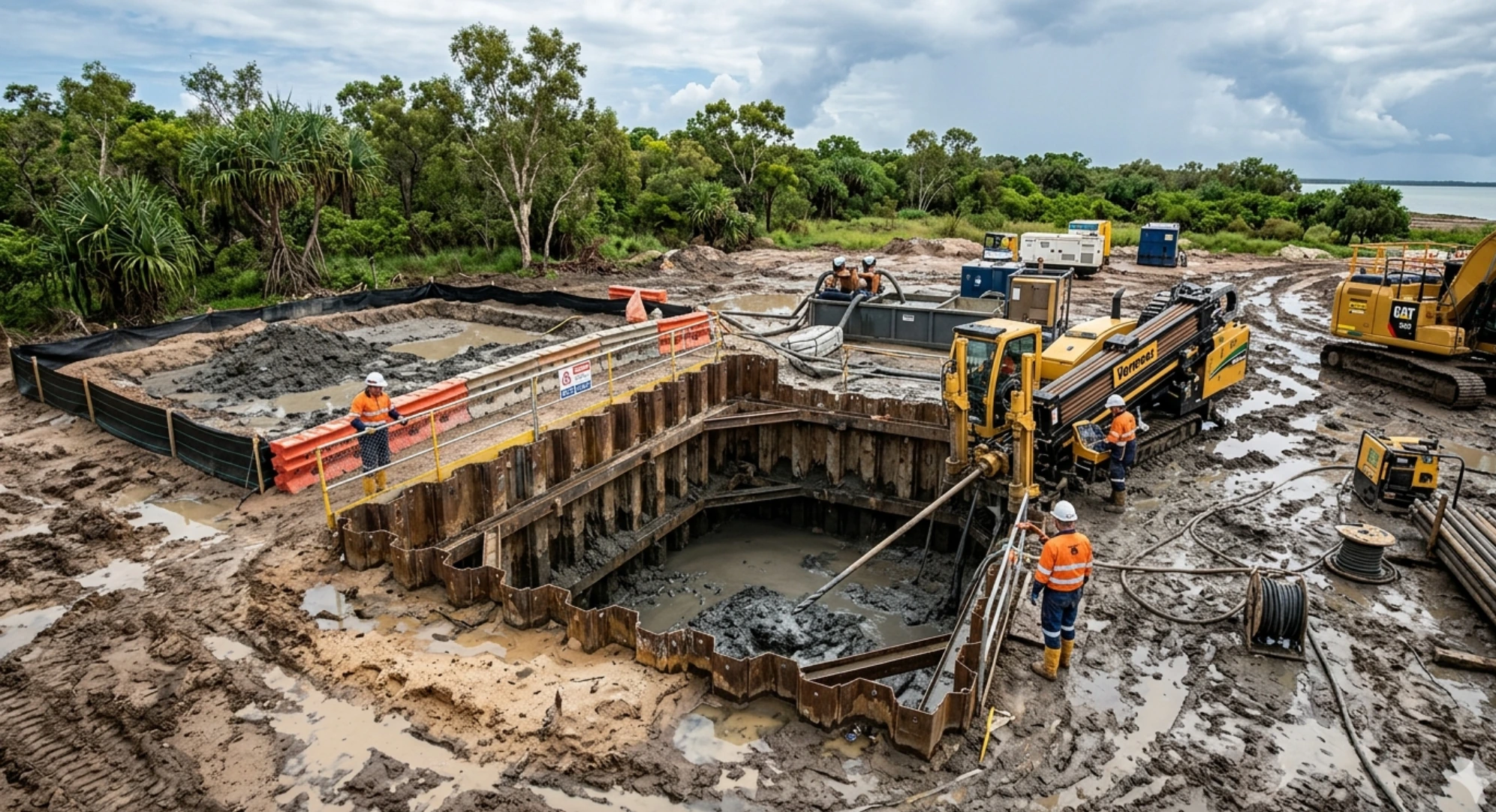
Northern Territory ground conditions are highly variable, so the same directional drilling method will not perform the same way from one site to the next. Choosing tools and techniques that suit local geology is critical for maintaining bore control, reducing the risk of frac-outs and keeping projects on time and on budget. Drillers begin by understanding what is in the ground before deciding how to drill through it.
From coastal sands and tidal flats to hard rock escarpments and expansive black soils inland, each ground type responds differently to drilling fluids, bit selection and pullback loads. Ignoring these differences increases the risk of stuck rods, collapsed bores or damaged services, which can quickly escalate costs on NT projects.
The NT often shifts from soft to hard ground within a short bore length. A pilot hole might begin in loose sand, then encounter cemented gravel or weathered sandstone, followed by reactive clay.
This variability affects:
In loose sands or alluvial deposits found around Darwin and other coastal areas, the bore can over-enlarge or collapse if drilling fluid is not carefully managed. In contrast, hard rock zones in escarpments or rocky outcrops require higher thrust and torque, along with more aggressive bits. Where multiple layers are present, drillers often plan shorter shot lengths or intermediate drill pits so tooling changes and fluid adjustments can be made safely.
Expansive clays and black soils found in parts of the NT swell when wet and shrink when dry. During the wet season, these materials can become extremely soft and sticky, making cutting and removal difficult. In dry conditions, they can become very hard and abrasive.
For directional drilling, this can mean:
Entry and exit pits must also be designed to manage sudden water inflows and protect nearby infrastructure.
Many NT corridors cross sensitive environments such as floodplains, creek crossings and areas with shallow groundwater. Ground conditions in these locations often include weak, saturated soils that provide poor support to the bore.
If the wrong drilling method or fluid pressure is used, the risks can include:
To manage this, drillers factor in ground strength, depth to rock and groundwater levels when selecting drilling methods and operating pressures. Lower-pressure fluid systems, controlled reaming passes and accurate survey data are used to keep the bore within more competent material and protect the surrounding environment.
Directional drilling performance depends heavily on how well ground conditions are understood before a rig ever moves on site. Across the NT, the ground can change rapidly from soft marine alluvium to hard sandstone or abrasive laterite within a short alignment. The choice of tooling, drilling fluids and drilling method should always begin with the expected soil and rock profile.
The Northern Territory is dominated by a mix of tropical coastal soils in the Top End and arid-zone formations through Central Australia. Each behaves differently under a drill head, affecting steering accuracy, bore stability and the risk of frac-out or equipment damage. Understanding the main ground types helps asset owners and contractors plan more realistic programmes, equipment selections and costs.
In many Top End locations, shallow ground conditions consist of fill, marine clays, silts and loose sands over weathered rock. These softer formations are often suitable for directional drilling, but they can become unstable if not managed correctly.
Marine and estuarine clays common near coastal corridors are plastic and can swell when wet. During drilling, they may stick to tooling and collapse into the bore if fluid properties are not properly balanced. This often requires carefully designed bentonite or polymer mud to support the hole and maintain returns. On very soft or reclaimed ground, entry and exit pits may also require shoring to prevent sloughing.
Alluvial sands and silts along creek lines and low-lying areas can allow fast penetration, but they also increase the risk of fluid loss and washouts. Well-graded sands can usually be drilled efficiently with moderate drilling fluid viscosity and suitable reamer selection. However, loose, waterlogged sands near tidal zones or drainage lines may require lower annular pressures and staged upsizing to reduce the risk of voids or surface settlement.
Further inland, a common ground profile includes lateritic gravel or ironstone nodules over weathered rock. Laterite is highly variable. In some locations, it behaves like dense gravel that drills relatively easily. In others, iron-rich nodules are extremely hard and abrasive, causing rapid wear to bits and reamers.
These materials often require more robust tooling, such as tungsten carbide bits and heavier-duty hole openers. Penetration rates are usually slower, and higher torque capacity becomes more important, especially on longer bores. Because lateritic horizons can sit above weaker clays, the bore path may need vertical adjustment to avoid repeated transitions between very hard and very soft layers, which can affect tracking and hole stability.
Weathered rock beneath laterite, such as decomposed sandstone or schist, is often drillable with standard HDD or guided boring equipment. However, the degree of weathering can change over a few metres, so pre-drilling geotechnical investigation, or at least a detailed desktop review, is strongly recommended.
Soft to medium sandstone can often be drilled effectively with mud motor assemblies and rock bits, allowing accurate steering on longer crossings. Fluid volumes and pump capacity usually need to be higher to clear cuttings from the annulus, especially on deeper bores. Where the rock is highly fractured or jointed, the risk of fluid losses increases, which may require loss-control additives or adjustments to drilling pressure.
Hard quartzite lenses, cherty bands and basaltic intrusions increase tooling wear significantly. In these zones, penetration rates drop and the practical length of a single shot may be reduced. On some alignments, it is more efficient to shorten bores or choose an alternative route rather than force a method through the most abrasive rock.
Rock outcrops are often interbedded with residual and colluvial soils. This means a single bore may pass from clay into rock and back into soil several times. For drillers, this drives the need for mixed-ground tooling and flexible drilling strategies so the crew can adapt as actual ground conditions are confirmed during pilot drilling.
Selecting the appropriate directional drilling method is largely about matching the technique and tooling to the specific ground profile on site. Projects can move from soft alluvials to hard rock and highly weathered material within a short alignment, so method selection must consider not just surface conditions, but the full bore path.
The key is understanding how the ground behaves under drilling pressure, fluid circulation and steering loads. That means assessing soil type, cementation, moisture content and the presence of cobbles or fractured rock, then choosing a method that can be steered accurately while protecting the pipe and the surrounding environment.
In soft clays, silts and sands typical of floodplains and coastal sites, conventional HDD with fluid-supported boreholes is usually the most efficient option. Drilling fluid is formulated to support the hole, transport cuttings and minimise settlement or surface heave.
In these conditions, drillers typically use:
Where loose, saturated sands are present, the main risks are loss of circulation and bore collapse. In these cases, crews often shorten shot lengths, increase pilot-hole accuracy and manage pullback speeds carefully to reduce drag on the product pipe.
Many corridors pass through mixed ground with alternating layers of clay, gravel and cobbles. These are often the conditions where bores fail if the wrong method or tooling is selected. Mixed ground requires more robust cutting structures and tighter control of drilling fluid properties.
Drillers commonly select:
Cobbles and boulders can deflect the bit, so steering corrections are planned in advance and entry and exit angles are reviewed to keep the bore path within the most drillable horizons. Where boulder frequency is high, adjusting the alignment or depth is often more effective than forcing a marginal method.
Hard and weathered rock formations found in parts of the NT require rock-capable directional drilling methods that can maintain line and grade without excessive tool wear. In these conditions, standard soft-ground HDD heads are generally unsuitable.
For rock conditions, drillers typically use:
Fractured or jointed rock also increases the risk of fluid loss. To manage this, drilling pressures may be adjusted, loss-control additives may be introduced or bore depth may be modified to remain within more competent strata. Where extremely abrasive rock is expected, additional reaming passes and planned tool changes help keep production rates more predictable.
Effective planning is essential when selecting and executing the right directional drilling method. Hard rock, reactive clays, seasonal flooding and remote locations can all affect cost, schedule and safety if they are not understood early. Front-end investigation and clear risk controls help ensure the chosen drilling approach is realistic for both the ground conditions and the regulatory environment.
Risk management and compliance are closely linked in the NT. Environmental sensitivities, cultural heritage obligations and strict utility protection requirements all influence drilling method, drilling fluids and alignment. Good planning aligns technical decisions with what regulators, asset owners and other stakeholders will accept on site.
The starting point is a targeted site investigation that goes beyond desktop geology maps. This may include test pits or boreholes along the proposed alignment to confirm rock strength, groundwater depth, the presence of cobbles and any highly weathered zones. The choice between horizontal directional drilling, guided boring and rock hammer systems is often refined once actual ground data is available.
Constructability planning then tests whether the preferred method is practical given access, logistics and available support. In remote locations, crew accommodation, water supply for drilling fluids and delivery of specialised plant all need to be resolved before method selection is finalised.
Directional drilling risks can include frac-out of drilling fluid, bore deviation in mixed geology, equipment failure in hard rock and schedule overruns caused by weather or ground-related delays. Drillers use formal risk workshops to identify these issues early and match them with specific controls rather than relying on generic management plans.
Controls may include limiting drilling pressures in weak formations, selecting high-performance rock tooling, designing conservative bend radii for pipelines and programming works outside peak rainfall periods where practicable. On environmentally sensitive sites, crews may implement continuous annulus pressure monitoring and regular surface inspections to detect fluid loss. Contingency plans for stuck pipe are also prepared in advance, including agreed reaming passes and alternative alignment options, so delays can be reduced if conditions worsen.
Directional drilling must comply with a range of statutes, codes and asset owner standards. Planning therefore includes early engagement with utility owners to confirm separation distances and any project-specific conditions, such as exclusion zones around high-voltage cables or high-pressure gas mains.
Environmental and cultural heritage compliance is equally important. Coordination with environmental regulators and relevant representatives helps ensure alignments avoid sensitive habitats and registered sacred sites. Drilling fluid selection and disposal methods must also meet waste management and water quality requirements, including the use of approved additives and lined fluid management pits where necessary.
Traffic control plans, work permits and safety management systems are finalised before mobilisation so drilling can proceed without unnecessary administrative delays. By aligning technical design with regulatory and stakeholder expectations during the planning stage, contractors reduce the risk of mid-construction changes that affect cost, timing and the suitability of the selected drilling method.
There is no one-size-fits-all directional drilling method for Northern Territory ground conditions. The most suitable approach depends on a clear understanding of the ground profile, environmental constraints, alignment risks and the performance required from the installation. Ground that shifts from soft coastal soils to abrasive rock or reactive clay can quickly expose the limits of a poorly matched method, leading to avoidable delays, higher costs and increased construction risk.
Successful directional drilling in the NT starts well before the rig arrives on site. Careful investigation, realistic planning and method selection based on actual ground conditions all play a major role in achieving accurate, efficient and safe outcomes. When the drilling method, tooling and fluid programme are properly matched to the site, projects are far more likely to stay on line and grade, protect surrounding assets and deliver reliable long-term results.


