Now Also operating from our new yard in Alice Springs. Our address is 3/31 Elder Street Ciccone 0870.


Advanced Monitoring and Technology in Directional Drilling
December 17, 2025
Projects now routinely pass beneath busy roads, rail corridors, waterways and existing services, leaving very little room for error. At JSM Civil, we work within these constraints every day and see first-hand how advances in monitoring and technology have reshaped the way directional drilling projects are planned and delivered. What was once heavily reliant on operator judgement alone is now supported by real-time data, smarter systems and better visibility underground, resulting in safer worksites and more reliable outcomes.
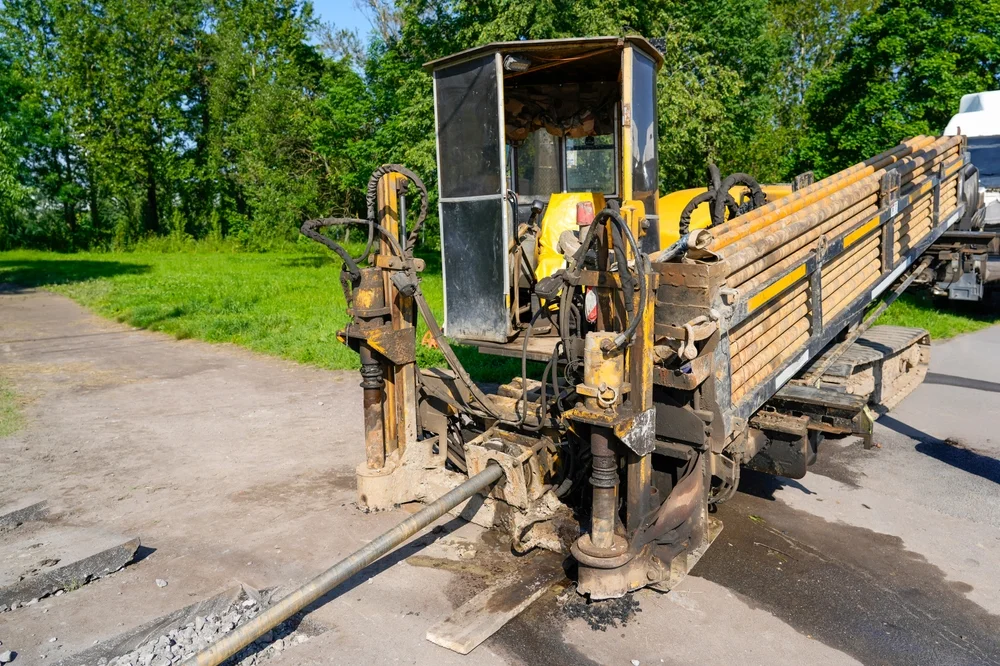
Modern monitoring systems give drilling teams continuous insight into what is happening below the surface. Instead of reacting to problems after they arise, crews can now make informed adjustments as drilling progresses. This shift has significantly improved safety and efficiency, particularly on Australian projects where ground conditions can change rapidly over short distances.
With clearer visibility underground, risks can be identified early, equipment can be protected and surrounding infrastructure can be better managed.
Real-time monitoring of pressure, torque and drilling fluid performance has become a core part of modern drilling operations. Sensors built into the drill string constantly measure how the bore is responding and feed that information back to operators.
In practice, this allows crews to spot early signs of increasing resistance, unstable ground or poor fluid circulation before they turn into serious issues. Adjustments can be made on the spot, reducing the likelihood of equipment damage, bore collapse or costly delays.
This level of control is especially important in Australian soil conditions, where transitions between clay, sand and rock are common. Properly managed drilling fluids help stabilise the bore, remove cuttings efficiently and reduce stress on equipment, leading to smoother and safer drilling overall.
Bore path monitoring systems ensure the drill head stays on its intended alignment and depth throughout the operation. Using advanced tracking technology, operators can see exactly where the bore is progressing and make small, controlled corrections when needed.
This precision is critical in urban environments and infrastructure corridors, where drilling often occurs close to existing utilities and structural foundations. Even minor deviations can increase the risk of service strikes or compromise long-term asset performance.
Accurate bore tracking also supports better planning beyond the drilling phase, allowing pipe installation, lifting operations and site reinstatement to proceed with fewer surprises.
Directional drilling is often chosen to minimise surface disruption, but underground risks still need careful management. Monitoring systems help by identifying early signs of ground movement or pressure imbalance that could affect surface assets.
These systems are particularly valuable when drilling beneath:
By detecting potential issues early, crews can take corrective action before problems reach the surface, helping protect public safety, nearby structures and the surrounding environment.
Monitoring is only part of the picture. A new generation of digital tools and automated systems is also changing how drilling projects are designed, controlled and managed. These technologies improve accuracy from early planning through to execution, reducing uncertainty and improving coordination across all stages of a project.
For contractors, this means more predictable workflows and fewer disruptions once work is underway.
Digital mapping technology allows drilling paths to be planned using detailed subsurface data. By combining service locations, geological information and bore profiles into a single digital model, teams gain a clearer understanding of potential challenges before drilling begins.
Automated path control systems then assist with steering the drill head during operation. These systems make continuous micro-adjustments to maintain alignment, reducing reliance on manual corrections and improving consistency, particularly on longer or more complex bores.
Accurate digital planning also helps teams better coordinate equipment, access and logistics, improving overall site efficiency.
Remote monitoring and AI-assisted tools are becoming increasingly common on Australian drilling projects. These systems analyse live drilling data and highlight trends that may not be immediately obvious to operators.
For example, AI tools can identify gradual increases in resistance or subtle changes in drilling fluid behaviour. Flagging these patterns early allows crews to make informed adjustments that reduce risk and prevent small issues from escalating.
This added layer of intelligence is particularly useful on extended projects or sites with restricted access, where maintaining consistent performance is critical.
Digital software platforms have also transformed how drilling projects are documented and managed. With Australia’s strict compliance and reporting requirements, accurate and accessible records are essential.
Modern systems support:
Reliable documentation not only simplifies compliance but also strengthens accountability and transparency across the project lifecycle.
When advanced monitoring and technology are used effectively, the benefits extend well beyond the drilling phase. These improvements influence timelines, budgets and overall delivery quality, making them particularly valuable on large-scale civil and infrastructure projects.
Technology-driven drilling has become a key factor in achieving consistent and reliable outcomes.
One of the most significant advantages of modern drilling technology is the ability to install services beneath existing infrastructure without extensive excavation. Improved accuracy reduces surface disturbance and allows work to progress with minimal impact.
This leads to smoother traffic management, reduced environmental disruption and faster project completion, especially in busy urban areas.
Improved data collection and real-time monitoring provide a clearer picture of subsurface conditions throughout the project. This allows teams to plan more effectively and respond with confidence when conditions change.
Better planning reduces uncertainty and supports more accurate scheduling of associated works, helping keep projects on track.
While advanced monitoring and digital systems require upfront investment, they consistently deliver long-term cost savings. Improved accuracy reduces rework, limits equipment damage and minimises unplanned downtime.
In practical terms, this results in:
Over time, these efficiencies lead to lower overall project costs and more predictable delivery.
Advanced monitoring systems and emerging technologies have significantly improved how directional drilling projects are delivered across Australia. By providing better visibility underground, improving accuracy and supporting smarter decision-making, these tools help reduce risk and improve outcomes across the board. From a business owner’s perspective at JSM Civil, embracing technology-led drilling is no longer just an advantage; it has become an essential part of delivering safe, efficient and reliable civil infrastructure projects.


