Now Also operating from our new yard in Alice Springs. Our address is 3/31 Elder Street Ciccone 0870.


Hydro Excavation vs Directional Drilling: When to Use Each Method
March 16, 2026
On civil projects across the region, hydro excavation in Darwin and directional drilling are both used to reduce risk and limit disruption, but they solve different problems. At JSM Civil, we use both methods across a wide range of infrastructure and utility works, and we understand how the right choice can affect safety, efficiency, cost and overall project delivery.
This article explains how each method works, where each one is most effective and what factors should guide the decision between them. It also looks at how hydro excavation and directional drilling can be used together to reduce risk, protect existing services and deliver more efficient outcomes on civil and utility projects.
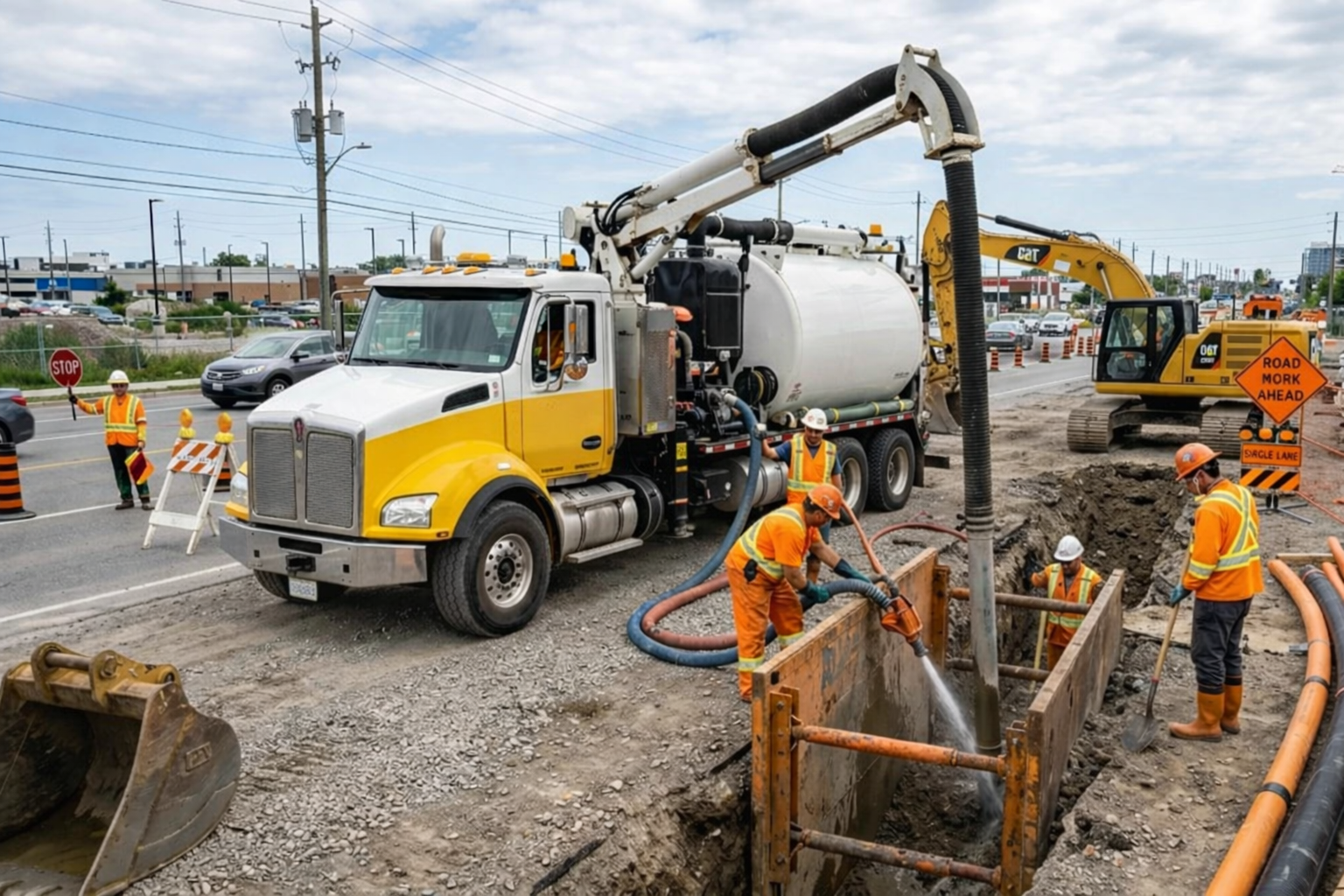
Hydro excavation is a non-destructive digging method that uses high-pressure water to break up soil and a powerful vacuum to remove the slurry into a spoil tank. It allows experienced hydro excavation technicians to expose services and excavate around critical assets with a much lower risk of damage than traditional mechanical digging.
This method is especially useful in congested underground corridors where power, gas, water and communications are clustered together. It delivers precise excavation with minimal ground disturbance, which supports safer and more predictable civil works.
A hydro excavation truck is equipped with a water pump system and a vacuum unit. Pressurised water is directed through a handheld lance to cut and loosen the soil. At the same time, a large-diameter vacuum hose removes the slurry to an onboard tank.
The operator carefully controls water pressure and flow rate to suit the ground conditions. Softer soils require less pressure, while harder or compacted ground may need higher pressure and more time. Because the excavation is done manually at the face, the operator can stop instantly if a pipe or cable is exposed.
Spoil is contained in the truck tank, which keeps the site cleaner and reduces the risk of contaminated material spreading. Once the work is complete, the slurry can be disposed of at an approved facility or used for backfilling if appropriate and permitted.
Hydro excavation is usually selected where accuracy and service protection are more important than excavation speed. Common applications include:
It is particularly valuable for urban infrastructure upgrades, road corridor works and renewals where old plans are unreliable. By visibly confirming utilities, trusted hydro excavation specialists can reduce utility strikes, improve safety and minimise project delays.
Hydro excavation is less effective in very rocky ground where water cannot easily break up the material and may be slower for large bulk excavations. In those situations, mechanical excavation or a combination approach may be more efficient.
Directional drilling, also known as horizontal directional drilling or HDD, is a trenchless installation method used to install pipes, conduits and cables underground along a planned path. It avoids open trenches across roads, driveways, waterways and landscaped areas.
HDD technicians use directional drilling to create underground routes with minimal surface disruption, which is often essential in built-up environments and along critical transport corridors.
Directional drilling is completed in three main stages. First, a pilot bore is drilled from the launch pit along a designed alignment to an exit pit. A steerable drill head and tracking system allow the operator to control depth and direction around known services and obstacles.
Second, the pilot hole is enlarged using reamers pulled back through the bore. Drilling fluid is pumped to stabilise the hole, support the surrounding ground and transport cuttings to the surface. The size of the reamers is selected to suit the final product being installed and the ground conditions.
Finally, the product pipe or conduit is attached to the drill string and pulled back through the enlarged bore. Once installed, the ends are connected to existing networks or new infrastructure as required.
Directional drilling is chosen when a linear underground installation is needed without opening the surface along the full route. It is commonly used for:
It is particularly effective for long, continuous installations where reinstatement costs would otherwise be high. However, it depends on accurate service location, careful planning and suitable ground conditions. In highly congested corridors, hydro excavation is often used first to expose critical services before the main crossing is completed using directional drilling.
Hydro excavation is usually the safer, more precise option when work is happening close to existing utilities, structures or in locations with limited access. It uses high-pressure water and vacuum extraction to cut and remove soil without heavy mechanical force, which significantly reduces the risk of damaging buried services.
For most clients, this method is particularly valuable where safety, risk management and site protection are top priorities. It can often be combined with directional drilling, with hydro excavation used first to expose or verify services before drilling proceeds.
Hydro excavation is ideal when the exact location of buried utilities is uncertain or when multiple services are clustered in a small corridor. Mechanical digging with an excavator bucket or auger can easily clip a gas main, power conduit or fibre line, which leads to outages, safety incidents and costly repairs.
Using hydro excavation to pothole or daylight services allows its technicians to:
This method is especially useful in older urban areas where as-built records are incomplete or inconsistent.
Where ground movement or vibration must be kept to an absolute minimum, hydro excavation is generally the better choice. Because it cuts with water rather than teeth or buckets, it greatly reduces the risk of undermining structures or cracking fragile assets.
Hydro excavation is typically preferred when working:
By carefully controlling the excavation depth and width, hydro excavation technicians can expose only what is needed, leaving the surrounding ground undisturbed, which supports structural stability and asset protection.
On busy streets or confined sites where large plant is impractical, hydro excavation offers far better control. A vacuum truck can park safely out of the way while a hose and lance reach the actual excavation point, which reduces traffic disruption and improves site safety.
Hydro excavation is often the better method for:
Spoil is immediately removed to the truck so there is less loose material on the surface and fewer trip hazards. This helps maintain tidy work zones and comply with strict safety and environmental requirements.
In frozen, compacted or highly variable soils, hydro excavation can maintain productivity where traditional digging slows or becomes too risky. Water pressure can cut through hard crusts and mixed backfill without the sudden grabs or jerks that occur with mechanical equipment.
This controlled approach lets hydro excavation technicians keep edges clean and prevents sudden breakthroughs into voids, ducts or existing pits, which makes it a better option wherever ground conditions are uncertain or inconsistent.
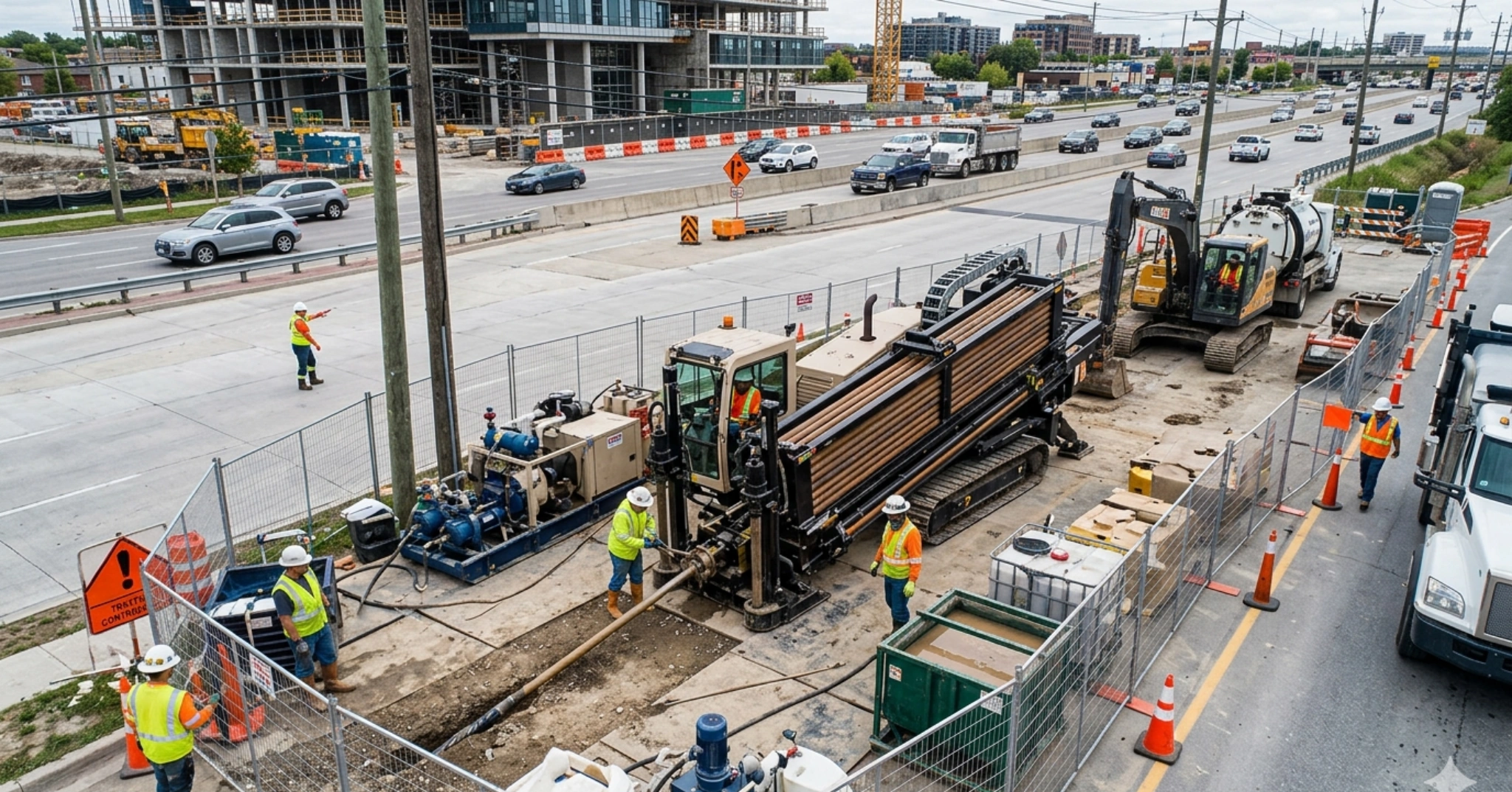
Directional drilling is usually the better option when the main objective is to install new services over a longer distance while keeping surface disruption to a minimum. Rather than opening a trench along the full alignment, it allows pipes or conduits to be installed underground in a continuous run beneath roads, rail corridors, waterways, driveways and landscaped areas.
For many civil, utility and infrastructure projects, this can reduce reinstatement requirements, shorten programme time and lower the overall impact on surrounding assets and road users. It is especially well suited to projects where the alignment is relatively well understood and the goal is efficient trenchless installation rather than close-range excavation around existing services.
Directional drilling is especially effective where a service needs to run for tens or hundreds of metres. Hydrovac can expose sections safely, but it is not efficient for installing long continuous pipelines or conduits.
Typical examples include:
On these projects, HDD specialists can drill a controlled bore then pull in a single continuous pipe string. This reduces the number of joints in the ground, which improves asset performance and cuts future maintenance risks.
Where access is restricted or surface disturbance is unacceptable, directional drilling is often the only practical option. It allows new services to be installed under:
Instead of traffic control and large open cuts, the work is contained to a launch and reception pit at either end of the crossing. This reduces disruption to road users and nearby businesses and also limits the cost and time needed for reinstatement.
For environmentally sensitive locations such as waterways or established trees, directional drilling keeps activity away from root zones and riverbanks. Combined with appropriate drilling fluids management, this provides a low-impact way to deliver essential services.
In busy utility corridors where there are multiple existing services at varying depths, directional drilling often provides a safer and more efficient solution than extensive excavation. Once existing assets have been located and verified using hydro excavation, the drill head can be steered between them at a controlled depth.
Directional drilling is also well suited where the design calls for deep installation, such as gravity sewers or large stormwater lines. Excavating deep trenches can be slow and expensive, particularly in poor ground or high water tables. By drilling at the required grade, HDD experts can reduce excavation volumes and improve site safety.
Choosing between hydro excavation and directional drilling usually comes down to cost, the level of disruption to the surrounding area and the technical demands of the work. Each method has clear strengths that make it better suited to particular ground conditions, site constraints and project outcomes.
Understanding these differences at the planning stage helps reduce the risk of delays, variations and unnecessary reinstatement costs. It also makes it easier to match the method to the actual purpose of the work, rather than forcing one approach to suit every part of the project.
Hydro excavation typically has a lower mobilisation cost and is ideal for short runs or small, complex areas such as service locates, potholing and exposing existing utilities. It is usually charged on an hourly or daily rate that includes the vacuum unit, water usage and spoil disposal. The cost per metre can be higher than drilling, but this is offset on small tasks by the speed of setup and minimal design requirements.
Directional drilling usually becomes more cost-effective as the length of the installation increases. It involves higher upfront planning and setup, including:
For longer pipe or conduit installations, especially where open trenching is not an option, the cost per metre of directional drilling is generally lower than hydro excavation. However, if the ground is highly variable, full of unknown services or requires frequent design changes, drilling time and cost can escalate.
Hydro excavation is one of the least disruptive excavation methods available. It uses high-pressure water and a vacuum to remove material, which means:
This makes it highly suitable in busy urban streets, sensitive environments and around critical infrastructure where open cuts are not acceptable.
Directional drilling also reduces surface disruption compared to trenching, but in a different way. It requires entry and exit pits and sometimes intermediate pits for connections or tracking. The ground surface between these pits is largely untouched, which is ideal for crossings under roads, railways, driveways or waterways. However, the pits themselves still require excavation, access and reinstatement, which can affect traffic, footpaths and nearby properties for the duration of the works.
Hydro excavation is best suited to smaller-scale or highly detailed tasks within a broader project scope. Typical uses include nondestructive digging for service identification, daylighting utilities before construction and precise excavation around congested corridors. It is often used as an enabling activity that de-risks later works such as drilling or trenching.
Directional drilling is better aligned to projects where the primary goal is to install new services over medium to long distances. Examples include water and sewer pipelines, telecommunications conduits and electrical conduits that need to pass beneath existing assets or obstacles. It is most efficient when alignments are clearly known and there is reasonable certainty about subsurface conditions.
Hydro excavation and directional drilling can absolutely be used together on the same project, and in many civil works this combined approach is the most efficient and lowest-risk option. Rather than relying on one method for every task, projects can be planned so each technique is used where it offers the greatest benefit.
On more complex jobs, hydro excavation is often used first to expose or verify existing utilities, after which directional drilling can be used to install new conduits or pipes along the planned alignment with greater confidence. Used this way, the two methods complement each other rather than compete.
To use both techniques effectively, the methodology needs to be planned from the start. The design should identify where the risk of service strike is highest and where hydro excavation is needed to verify existing utilities before drilling proceeds. It should also identify where longer trenchless runs are better suited to directional drilling.
Sequencing is also important. Hydro excavation crews usually work ahead of the drill rig so all critical services are exposed and surveyed before drilling begins. Clear communication between the hydrovac operator, locator and drill crew ensures bore paths and depths reflect what is actually uncovered in the field rather than just what is shown on drawings.
By deliberately combining hydro excavation and directional drilling in this way, project teams can deliver works that are safer, less disruptive to the community and more cost-effective than relying on either method alone.
Selecting between hydro excavation and directional drilling comes down to the site conditions, the purpose of the works and the level of risk that is acceptable around existing services and structures. Both methods are non-mechanical alternatives to traditional trenching, but they solve slightly different problems.
Contractors help clients choose by assessing how precise the work needs to be, how much ground needs to be covered, what is in the ground already and what access is available. In many projects the best outcome comes from using both methods in different stages of the job.
Choosing between hydro excavation and directional drilling comes down to the demands of the site and the purpose of the work. Hydro excavation is often the better option where accuracy, service protection and minimal ground disturbance are the priority, while directional drilling is usually more effective for longer underground installations that need to avoid surface disruption.
On many projects, the best result comes from using both methods together. Hydro excavation can be used to expose and verify existing services, while directional drilling allows new pipes or conduits to be installed efficiently along the planned alignment. By assessing service density, access, ground conditions, installation length and the level of acceptable disruption, project teams can choose the approach that best supports safety, efficiency and overall project performance.


