Now Also operating from our new yard in Alice Springs. Our address is 3/31 Elder Street Ciccone 0870.


Hydro Excavation Explained: Safe Utility Locating for Darwin Projects
January 16, 2026
Our team at JSM Civil knows that working around buried utilities can be stressful for builders and project teams because every dig carries risk when using traditional equipment. Many project delays in Darwin happen due to service strikes and avoidable damage around pipes or cables, so taking a careful approach is always better than rushing with heavy machines.
Hydro excavation in Darwin offers a way to expose assets with care, using pressurised water and vacuum extraction rather than large machinery. The method keeps crews safer and helps deliver more predictable project timelines. It suits construction environments like tight urban streets for remote access work because JSM Civil keeps asset damage to a minimum and gives crews better visibility underground.
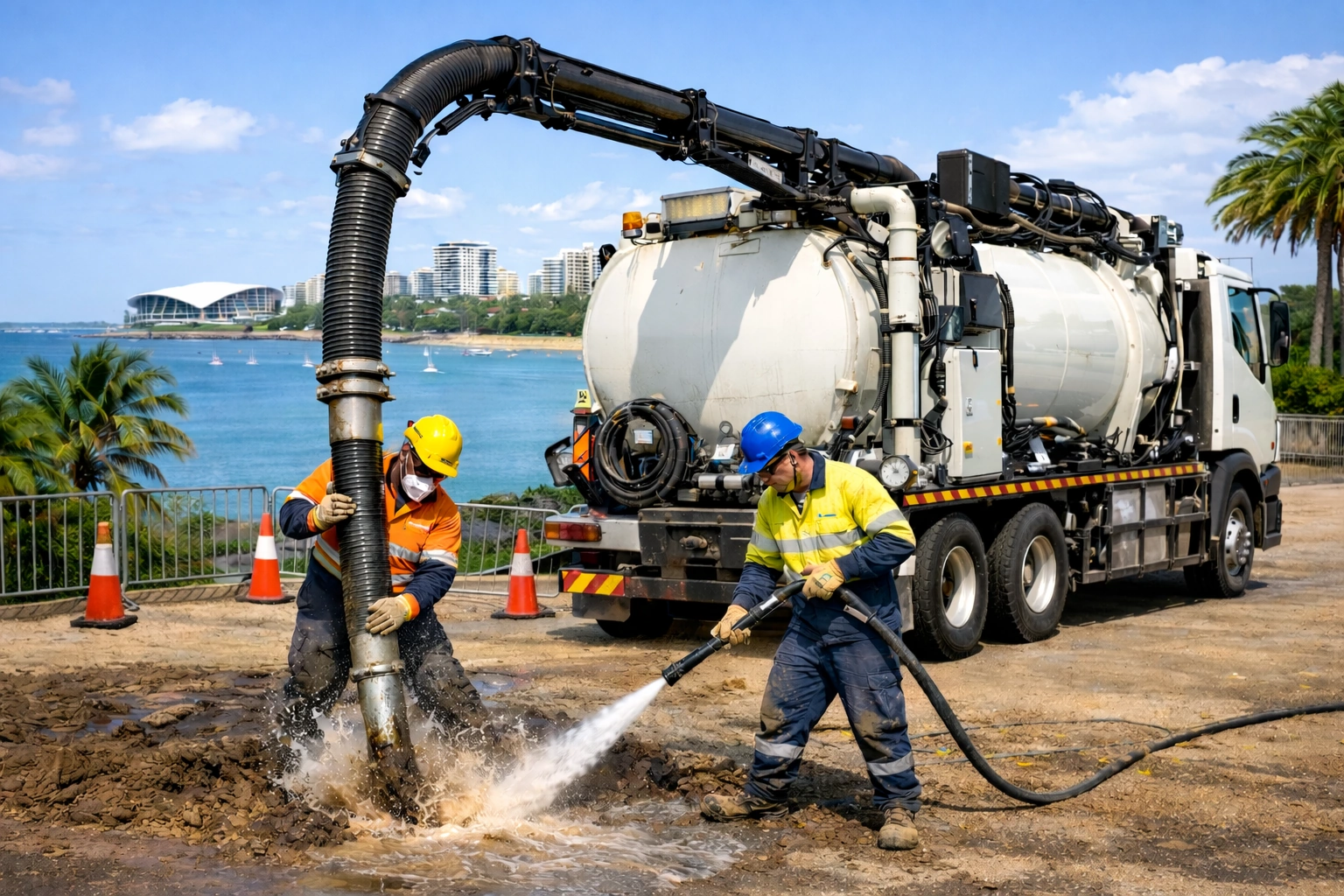
Hydro excavation uses pressurised water to break up soil while a vacuum system removes the slurry into a secure tank. The process gives operators a clear view of underground utilities and structures without cutting or ripping through the earth. It avoids the heavy scraping that happens with traditional excavation equipment and allows more precise digging near sensitive areas. Many construction teams lean towards this method because it handles tough ground conditions without the same hazard profile as mechanical digging.
Vacuum trucks use a strong suction system to remove soil while pressurised water loosens the ground, creating a smooth workflow for uncovering pipes and cables in a controlled way. Air excavation uses compressed air to break up ground instead of water, producing a dry spoil that can be reused on site but is not always suitable for clay or saturated ground conditions. Each system has strengths based on soil type with environmental factors and project goals.
Both systems open up subsurface areas with less risk, but vacuum trucks provide more consistent performance across varied ground conditions. Air excavation still plays a role when dry reusable spoil is a priority.
Soil type affects the efficiency and safety of hydro excavation due to how different materials react to water and suction. Sandy soils wash away easily under pressurised water, while clays soften slowly and may need more dwell time during cutting. Mixed soils add complexity because they change texture as the excavation progresses, so operators need experience to adjust pressure and vacuum rates.
Knowing how soil reacts to water and suction makes a major difference to efficiency and spoil management. Correct planning avoids downtime and keeps excavation moving at a safe, steady pace.
Modern hydro excavation units come with varying water pressure ratings with tank capacities and vacuum power levels that influence productivity. Higher pressure systems can remove compacted soils faster but need experienced operators to avoid turbulence around sensitive assets. Vacuum capacity also matters because weaker suction can stall progress once slurry volumes increase in deeper cuts.
Equipment capability directly affects speed and safety when exposing buried infrastructure. Selecting the right unit for the ground and access conditions ensures reliable delivery across different project types.
Construction teams use hydro excavation when working near underground communications or high-voltage infrastructure where mechanical digging poses greater risk. It is a controlled method ideal for exploratory work and trenching because operators can target small areas without disturbing the full site. It also fits tight access projects where trucks and machinery cannot operate safely due to overhead lines or narrow paths. Many crews rely on hydro excavation during upgrades and maintenance because existing infrastructure is often older and more fragile than new assets.
Remote sites often include heritage structures or unknown utility layouts that make mechanical digging risky. Urban spaces include tight corridors and easements packed with essential services that need non-destructive exposure. Hydro excavation becomes a universal solution because it adapts to these different environments without heavy disruption.
Hydro excavation handles both remote and urban challenges with minimal disruption. Construction teams appreciate the control it provides across varied ground and asset conditions.
Certain tasks require careful exposure of buried assets before full-scale excavation begins. Potholing involves locating and confirming utility depth so designers and installers can map alignments for new construction. Dayworks call-outs often involve utility strikes or emergency repairs and even unknown service layouts where non-destructive digging reduces further damage.
Using hydro excavation for exploratory work builds confidence before heavy machinery arrives. The early stage accuracy saves time and reduces conflicts during project delivery.
Trenching around buried services presents high risk because one wrong move can damage pipes or cables and even conduits. Hydro excavation allows trench walls to be formed without direct blade contact, giving crews safer access for installations and repairs. It helps maintain separation distances between existing and new services without service strikes.
Hydro excavation works well for trenching where underground congestion is high. It gives installers more control and reduces service conflict risks during construction.
Safety is central to any construction method, and hydro excavation reduces many of the hazards found in mechanical digging by removing blade contact with buried assets. The process lowers the chance of electric shocks or gas leaks and even flooding events that often occur when backhoes strike unknown services. It supports environmental goals due to reduced soil disturbance and lower noise levels around work zones. Many infrastructure owners lean towards hydro excavation for maintenance work because it keeps service continuity high and stakeholder complaints low.
High rainfall seasons introduce issues such as waterlogged soils and weather-related delays. Hydro excavation helps crews handle these conditions because vacuum systems remove saturated spoil that would otherwise flood trenches or mix with site runoff. Weather becomes less of a barrier when tools allow controlled excavation and contained waste handling.
Hydro excavation gives construction teams better control during wet months by containing spoil and stabilising work zones. This improves safety and reduces weather-related downtime.
Service disruptions frustrate communities and increase project costs due to emergency repairs and reinstatement delays. Hydro excavation reduces these disruptions by exposing utilities without striking them, allowing installations to proceed without outages. Utility owners often mandate non-destructive digging around certain assets because it keeps operations live.
By avoiding strikes and protecting live services, hydro excavation keeps communities running smoothly during infrastructure work. Fewer disruptions mean better timelines and stronger client trust.
Environmental considerations influence construction decisions more than ever, and hydro excavation supports many sustainability goals. It reduces spoil disturbance and prevents unnecessary excavation around tree roots and natural features. The enclosed spoil system also prevents soil from washing into storm drains or nearby waterways.
Hydro excavation aligns with modern environmental expectations by reducing disturbance and protecting surrounding landscapes. Cleaner operations lead to smoother approvals and better long-term outcomes.
Construction teams have many excavation methods available, but hydro excavation stands out for safety and environmental performance. From exploratory work to trenching and maintenance, the process delivers predictable results without damaging buried assets or disrupting communities. This approach helps deliver better project outcomes across a wide range of conditions, from wet soils to congested utility corridors.
Safe utility locating plays a major role in meeting modern infrastructure demands, and the move towards non-destructive digging reflects higher industry expectations. Project managers gain confidence with fewer service strikes and more accurate planning, while communities benefit from cleaner and less disruptive work zones. Clear spoil containment and lower environmental impact also support better sustainability outcomes for long-term infrastructure planning and delivery.


