Now Also operating from our new yard in Alice Springs. Our address is 3/31 Elder Street Ciccone 0870.


Why Directional Drilling Suits Defence and Remote Access Projects in the NT
July 20, 2026
Directional drilling has become an important construction method for projects that require underground services to be installed with minimal surface disturbance. Horizontal directional drilling, commonly known as HDD, creates a controlled underground bore path for pipes and conduits, reducing the need for continuous open trenches.
The method can be particularly valuable across Northern Territory defence sites and remote locations, where projects may need to cross beneath roads, airstrips, rail corridors, waterways and existing infrastructure while maintaining access and managing environmental, cultural heritage and security requirements. Drawing on extensive civil construction experience, JSM Civil delivers precision drilling solutions suited to complex and challenging project conditions.
This article explains why directional drilling can be an effective option for NT defence and remote infrastructure projects. It examines how the method helps maintain operational continuity, manage difficult terrain and seasonal access, protect existing underground services and reduce environmental disturbance. It also considers the situations where directional drilling may not be the most practical or cost-effective installation method.
Defence facilities and remote infrastructure corridors place specific demands on underground service installation. Conventional open trenching may conflict with security controls, sensitive ground conditions, seasonal access limitations and the need to keep roads, facilities and operational areas functioning throughout construction.
These projects often cover long distances and may need to cross beneath sealed roads, floodways, airside pavements, culturally sensitive areas and existing utilities. Harsh weather, remote logistics and restricted access can make the selected installation method a major influence on project risk, cost and scheduling.
Defence precincts, training ranges and restricted facilities operate under strict security protocols. A continuous open trench can create a large exposed work front, require extensive access controls and interfere with daily operations.
Directional drilling generally concentrates surface works within controlled entry and exit areas. This can reduce the number of exposed work locations, limit interaction with secure zones and shorten the period during which new infrastructure is vulnerable to interference.
Many defence sites also contain sensitive or critical assets, including:
Excavation near these assets increases the risk of accidental damage. Once existing services have been accurately located and verified, a guided bore can be designed to pass beneath or around them while maintaining specified horizontal and vertical clearances.
Operational continuity is another important consideration. Defence roads, access gates, haul routes and logistics corridors may not be suitable for extended closures. Subject to project approvals and operational controls, directional drilling can allow new services to be installed beneath these areas while significantly reducing closures, detours and disruption.
Remote NT projects can involve long travel distances, limited accommodation, restricted fuel access and a reliance on seasonal roads. Continuous trenching across a large corridor may require multiple excavators, graders, support vehicles and spoil-handling equipment.
Directional drilling does not eliminate mobilisation requirements, particularly for large rigs and fluid-management systems. However, where the method is suitable, it can reduce the amount of continuous clearing, excavation, spoil removal, imported backfill and surface reinstatement required.
During the wet season, open trenches may fill with water, slump or erode. Directional drilling limits open excavation mainly to controlled work areas, which can often be positioned on stable ground away from flood-prone channels and low-lying sections.
Traditional open-cut installation requires a continuous trench along the service route. This exposes soil, vegetation and existing infrastructure for the full length of the alignment and can create significant traffic, safety and reinstatement requirements.
Directional drilling installs the service along an underground bore path between controlled entry and exit locations. Formal pits may be required on some projects, while others use compact entry and receiving work areas depending on the service, equipment and design.
Reducing the amount of open excavation can provide several project benefits, including:
In remote areas, the bore path may be designed to pass beneath creeks, drainage lines, roads and environmentally sensitive ground rather than cutting directly through them.
The amount of surface disturbance still depends on rig size, pipe-string layout, fluid-management requirements and access to the entry and exit areas. Directional drilling should therefore be assessed against the conditions of each project rather than treated as a disturbance-free method.
Open trenching across roads or access tracks may require lane closures, temporary crossings, detours or complete shutdowns. Directional drilling can install services beneath these assets while most plant and personnel remain away from the active carriageway.
For defence and remote projects, this can support:
Temporary controls may still be necessary around drilling compounds, pipe-string areas and entry or exit locations. However, the overall interruption is often lower than it would be for a continuous open trench.
Because reinstatement is generally concentrated around the drilling work areas, affected surfaces can often be returned to use more quickly. This can reduce visible scarring, erosion risks and maintenance issues associated with long reinstated trench lines.
Defence training grounds, pastoral properties and remote communities may also benefit from retaining more of the existing ground profile and vegetation between the drilling locations.
Directional drilling can be particularly useful where movement is tightly controlled and disruption must be minimised. These environments may include airfields, defence bases, secure compounds, perimeter fences and high-use access corridors.
By installing services beneath operational surfaces, directional drilling can reduce the need to break up pavements or open continuous trenches through restricted areas.
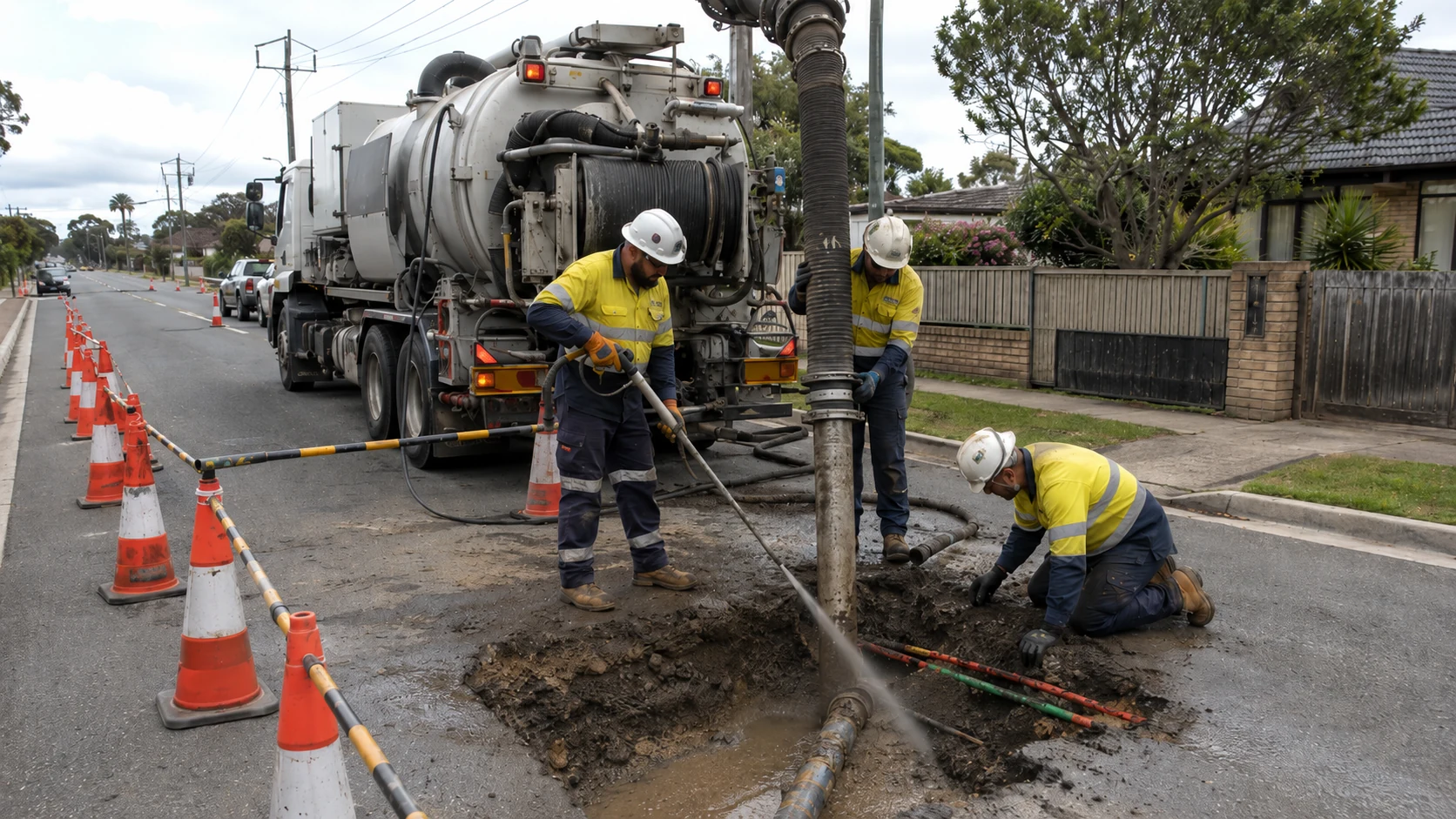
In airside and defence environments, construction must be carefully coordinated with daily operations. Directional drilling allows rigs and support equipment to be positioned away from critical pavements where suitable work areas are available.
The bore can then pass beneath:
Subject to engineering assessment, operational approval and site-specific controls, these assets may remain in service or experience substantially fewer closures during installation.
This does not remove the need for monitoring and risk management. Bore depth, ground stability, pavement condition, drilling pressure and proximity to existing services must all be considered before drilling beneath operational infrastructure.
Defence facilities and airport precincts may require personnel screening, escorts, equipment inspections and tightly controlled movement within secure zones.
Directional drilling can be planned so that most equipment and personnel remain in approved work areas. Potential security benefits include:
Entry and exit locations can be selected to minimise interaction with sensitive assets. Accurate steering, depth control and as-built surveying also provide a record of the completed bore relative to existing services, pavements and structural foundations.
Surface disturbance near aircraft movement areas can create dust, debris and foreign object damage risks. By limiting excavation and pavement removal, directional drilling may reduce these hazards.
However, strict housekeeping remains essential. Drilling fluids, excavated material, equipment and temporary work areas must be controlled so they do not create hazards within operational aviation environments.
Directional drilling can support the installation of water, sewer, power and communications infrastructure across terrain where continuous trenching would be disruptive, difficult or impractical.
The technique is often used for critical crossings within a wider service route. Long corridors may be completed as a planned series of separate bores rather than one continuous kilometre-scale installation.
Directional drilling uses steering and tracking systems to monitor the position and angle of the drill head. This allows the bore path to be adjusted during the pilot bore so it can follow the designed alignment and maintain the required cover.
Longer crossings are planned according to factors such as:
The route may include controlled curves and straight sections that remain within the allowable bending radius of the product pipe.
Entry and exit areas are generally positioned on stable ground where rigs, fluid systems and support equipment can operate safely. Where possible, these areas may be placed above flood-prone sections so work can continue during suitable access windows.
Remote projects may encounter:
Where geology and design allow, a bore can be directed beneath or around these constraints without creating a continuous disturbed corridor.
In floodplain environments, the bore path may be designed below areas vulnerable to erosion or scour. In rock formations, suitable drilling heads, reamers and fluid systems are selected to manage penetration, cuttings removal and bore stability.
Where access is restricted, the drilling equipment must still reach the entry and exit locations. Product pipe may also require space for welding, joining and pullback preparation. These needs must be considered early when assessing whether HDD is practical.
Remote defence facilities and communications corridors may require several underground services along the same route. Depending on design requirements, directional drilling may be used to:
The selected arrangement must account for bore size, rig capacity, pullback loads, conduit spacing and future maintenance needs.
For electrical installations, designers may also need to consider thermal loading. Communications infrastructure may require suitable separation from power services to protect performance and signal integrity.
Fuel pipelines and other high-risk infrastructure require additional integrity, safety and regulatory controls. They should not be treated in the same way as standard power or telecommunications conduits.
Underground service damage is one of the most significant risks associated with directional drilling. Effective risk management begins well before the drill rig arrives.
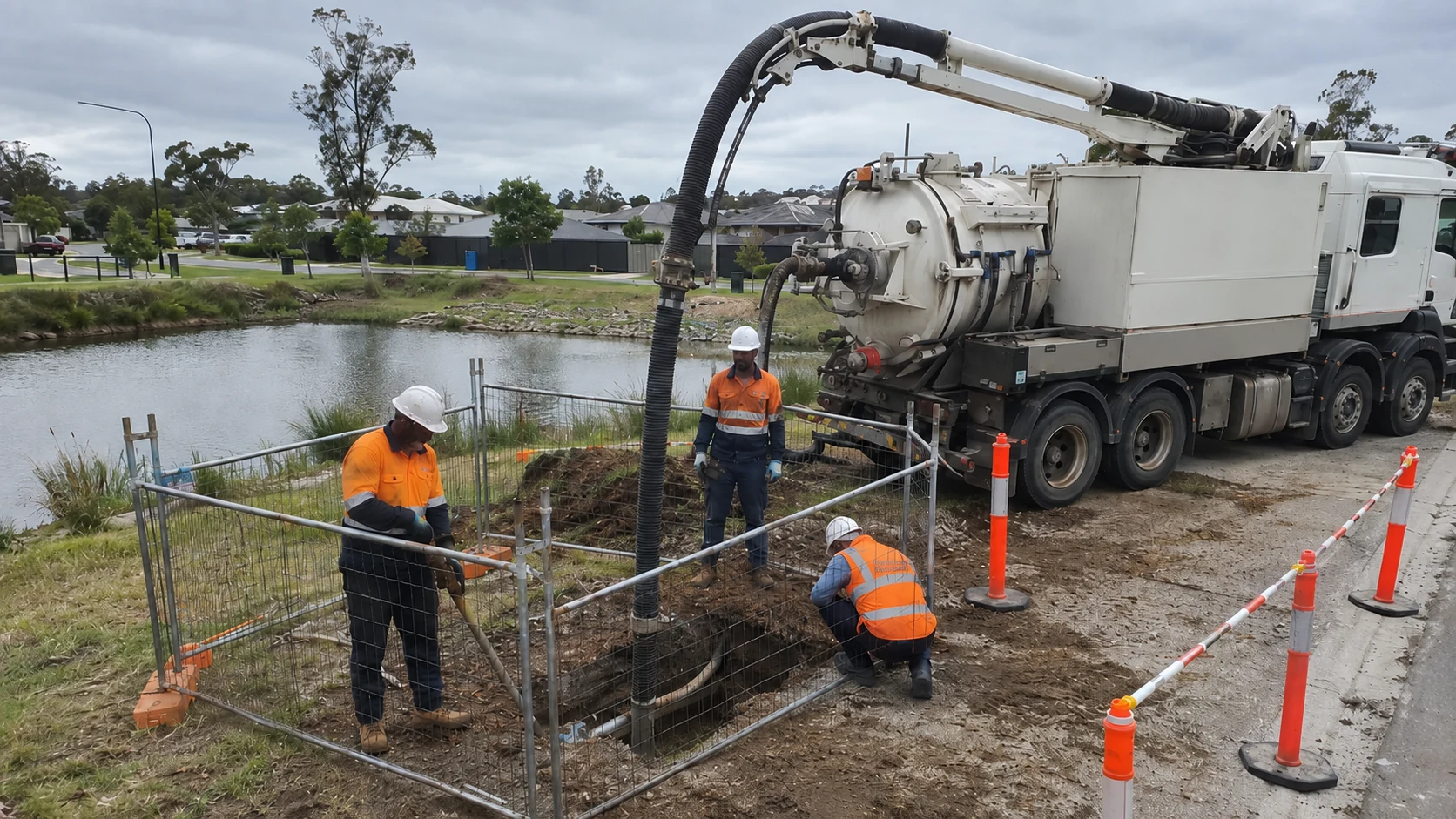
The process normally includes desktop investigation, service locating, field verification, geotechnical assessment, surveying and the development of a detailed drilling methodology.
The first step is to identify all known underground assets within and near the proposed bore alignment.
Information sources may include:
No single source should be treated as completely reliable. Historical records may be incomplete, inaccurate or based on approximate alignments.
Electronic locating can be used to refine available information. Depending on the service material and ground conditions, this may involve electromagnetic locating, ground-penetrating radar, tracer wires or other detection methods.
Potholing or hydro excavation is used to physically expose underground services at critical locations. This provides positive confirmation of their depth, alignment, size and material.
Potholing may be required at:
Non-destructive excavation methods are generally preferred around sensitive defence and utility assets because they reduce the risk of damage compared with mechanical excavation.
Once exposed, services should be surveyed so their verified horizontal and vertical positions can be incorporated into the bore design.
After existing services have been verified, the bore can be designed to maintain required separation distances and avoid declared protection zones.
Design considerations may include:
A drilling management plan should document the proposed controls, permit requirements, hold points, communication arrangements and responses to unexpected conditions.
Additional monitoring may be required when drilling near critical defence, fuel, electrical or communications infrastructure.
The Northern Territory contains a wide range of ground conditions, including alluvial soils, reactive clays, sandstone, weathered rock and high-strength formations. Conditions may change significantly over a relatively short distance.
Directional drilling can be adapted through tooling, bore design and drilling-fluid management, but it is not automatically suitable for every formation.
The pilot bore, reaming process and fluid programme must be selected according to the expected ground conditions.
In softer or unconsolidated soils, the focus may be on maintaining bore stability and controlling fluid loss. In competent rock, specialised tooling such as tri-cone or polycrystalline diamond compact rock bits may be required to cut the pilot bore.
Reactive clays can present challenges because they may swell, soften or adhere to drilling equipment. Drilling-fluid properties may need to be adjusted to support the bore, transport cuttings and reduce clay dispersion.
These adjustments should be developed by appropriately experienced personnel. Simply increasing drilling-fluid pressure, density or gel strength can create other risks, including fluid loss or an inadvertent return to the surface.
Geotechnical investigation is therefore important, particularly for long crossings, critical infrastructure or projects where the consequences of bore instability are high.
The wet season can bring intense rainfall, high groundwater levels and flooded creek lines. These conditions can make continuous open trenching difficult and may leave excavations exposed to erosion, collapse or washout.
Directional drilling can reduce the amount of open ground by limiting excavation to the work areas. Entry and exit locations may also be positioned away from flood-prone channels where suitable land is available.
The bore can pass beneath saturated areas and waterways, reducing the need to construct temporary crossings or leave open trenches through low-lying ground.
However, wet-season drilling still requires careful planning. Important considerations include:
Fluid recycling systems may reduce the volume of waste requiring transport, which can be beneficial when remote access tracks become unreliable after heavy rain.
Directional drilling may also shorten the period for which ground remains exposed. This can be helpful where construction must be completed during short dry-weather access windows.
Remote corridors may intersect waterways, wetlands, sensitive habitats and areas of Aboriginal cultural heritage significance. Open trenching through these locations can increase vegetation loss, erosion, sediment movement and disturbance of culturally important ground.
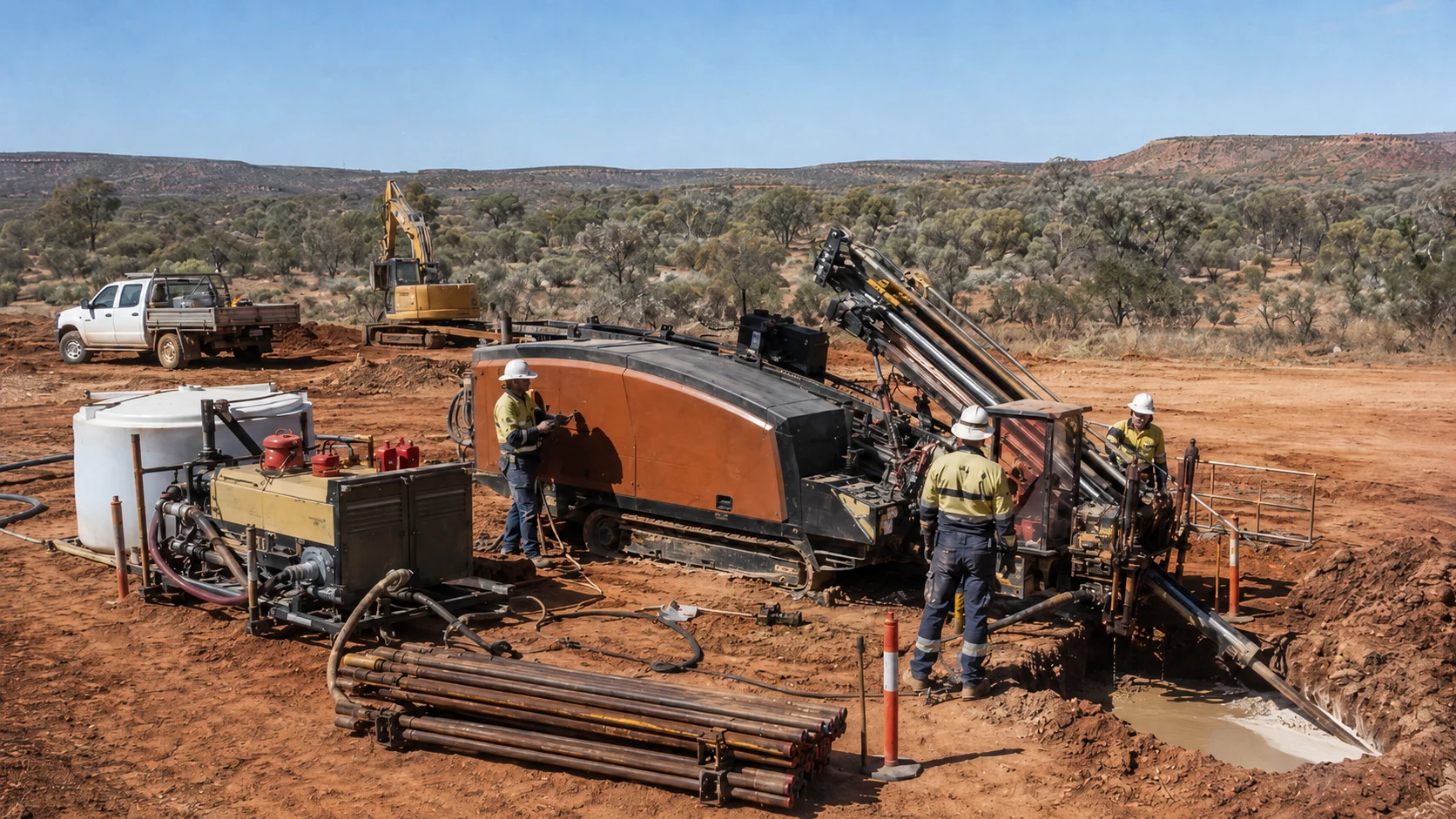
Directional drilling can reduce direct surface impact by passing beneath sensitive sections while concentrating disturbance within approved work areas.
Avoiding a continuous trench may reduce:
This may simplify rehabilitation and support compliance with environmental and cultural heritage management plans that restrict excavation to specific locations.
However, directional drilling does not eliminate environmental risk. Work pads, access routes, fluid systems and product pipe preparation areas can still require substantial space.
Drilling fluids support the bore, cool the tooling and carry cuttings back to the surface. Their use must be carefully controlled, particularly near waterways and wetlands.
One potential risk is an inadvertent return, sometimes referred to as a frac-out, where drilling fluid escapes through fractures or weak ground and reaches the surface.
Controls may include:
Drilling beneath a sensitive area can reduce direct excavation, but the bore design and fluid-management plan must still account for the possibility of fluid loss.
Where cultural heritage values are present, consultation and approved management procedures are essential. Depending on the location and scope of the works, an AAPA Authority Certificate may be required before ground-disturbing activities begin.
Directional drilling may help avoid direct excavation within identified areas by locating entry and exit points outside protected boundaries. The method can also reduce the total area requiring ground disturbance.
This does not replace the need for surveys, approvals, exclusion zones or heritage monitoring. Bore alignments must be developed in consultation with the relevant stakeholders and in accordance with the project’s cultural heritage management requirements.
Directional drilling can provide substantial benefits, but it is not always the most practical or cost-effective construction method. Ground conditions, available space, project scale and regulatory requirements must all be considered.
Soft, collapsible soils, highly fractured rock, loose sands and formations containing voids can make it difficult to maintain bore stability and alignment.
These conditions may increase the risk of:
In karst limestone or ground containing cavities, the drill path may intersect voids that disrupt fluid circulation and increase the risk of settlement or subsidence.
Hard rock drilling may be technically possible but slower and more expensive. Bit wear, reaming time, pullback forces and tooling risks can increase significantly.
Where geotechnical information is limited, staged investigation or exploratory drilling may be necessary before committing to a long or critical bore.
Directional drilling requires sufficient room for:
This space may not be available on constrained defence sites, steep terrain or densely serviced corridors.
In environmentally sensitive areas, clearing enough land for equipment and pipe-string preparation may conflict with approval conditions. Short sections of controlled open trenching or another trenchless method may therefore be more practical.
Urban-fringe defence sites and established facilities may contain dense networks of buried services. If no suitable bore window can be designed with safe clearances, directional drilling may create an unacceptable strike risk.
In these situations, alternative alignments, smaller equipment, vacuum excavation or controlled open-cut installation may offer better risk control.
Directional drilling requires specialist equipment, experienced personnel, survey work and drilling-fluid management. Mobilisation and set-up costs can be significant.
For a short, shallow connection across ground that is easy to excavate and reinstate, a small open trench may be faster and more economical.
The construction method should therefore be selected according to whole-of-project value rather than surface disturbance alone.
Directional drilling can introduce schedule risk when suitable equipment or experienced crews are not available within the required NT construction window.
Planning and approval requirements may also increase where the bore passes beneath critical assets, waterways, airside areas or restricted defence infrastructure.
Some projects may impose limitations on drilling-fluid additives or require specific containment and waste-management procedures. If compliant drilling-fluid systems are not practical, open excavation or another trenchless method may be more suitable.
Directional drilling has become an important construction option across the Northern Territory because it can combine controlled underground installation with reduced surface disturbance.
Where site conditions and project design are suitable, the method can help maintain access, limit interference with defence and airside operations, cross beneath roads and waterways and reduce the environmental impact associated with continuous open trenching.
Successful delivery depends on thorough service locating, positive identification of underground assets, geotechnical investigation, accurate bore design and carefully managed drilling fluids. Project teams must also consider security, cultural heritage, environmental obligations, seasonal access and the limitations of the selected equipment.
Through careful investigation, planning and controlled installation, JSM Civil supports defence, civil and remote infrastructure projects that must navigate difficult terrain, restricted access and demanding NT conditions.


