Now Also operating from our new yard in Alice Springs. Our address is 3/31 Elder Street Ciccone 0870.


How Directional Drilling Supports Remote Infrastructure in the Northern Territory
May 21, 2026
Remote infrastructure delivery in the Northern Territory presents challenges that extend far beyond standard construction conditions. Vast distances, harsh climates, difficult terrain and strict environmental and cultural obligations all place pressure on project timelines, budgets and long-term asset performance. At JSM Civil, experience with directional drilling in remote parts of the Northern Territory has shown how valuable trenchless construction can be where access is limited, conditions are harsh and surface disturbance needs to be carefully controlled.
This article explores how trenchless construction methods support the delivery of power, water, communications and transport infrastructure. It explains how directional drilling reduces disturbance while improving constructability, risk management and long-term reliability. It also outlines the planning, geotechnical assessment and local expertise required to deliver resilient infrastructure in demanding remote conditions.
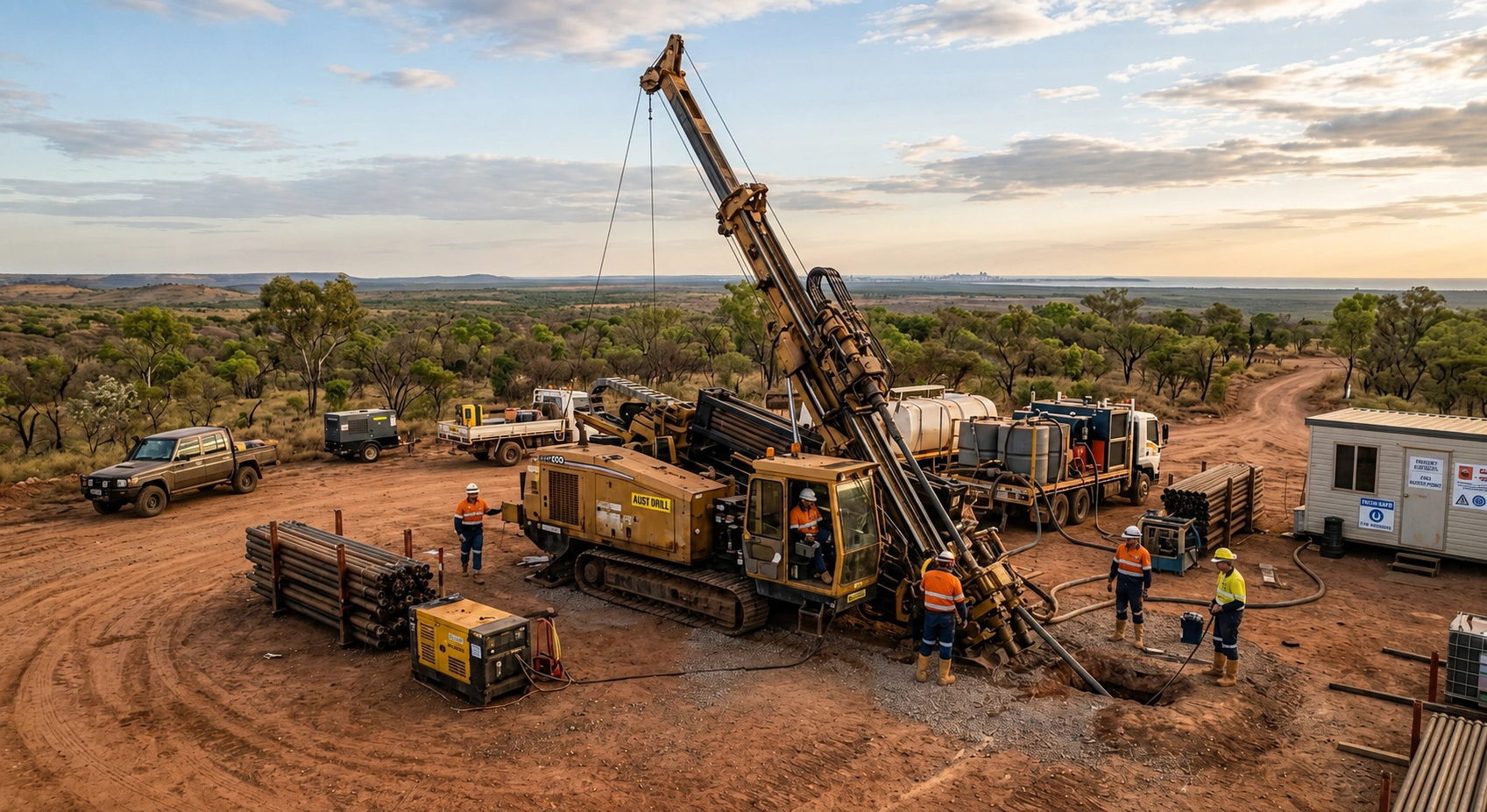
Remote infrastructure faces challenges that are rarely encountered on typical urban projects. Long distances, harsh climatic conditions and limited access to services all increase technical risk, programme duration and overall cost. Directional drilling can help reduce some of these pressures, but the underlying constraints of the environment must be understood first.
Designing and delivering pipelines, power, water and communications in isolated parts of the Territory requires a different mindset from city-based work. Every decision, from alignment selection to construction method, must consider access, logistics, environmental sensitivity and long-term asset protection.
Remote projects are usually far from major towns, depots and suppliers. This affects even basic tasks such as mobilising plant, fuel and crews to site. Unsealed roads that become impassable after rain can halt works and prevent crucial deliveries.
Material supply becomes a major planning exercise. Pipe, cable, drilling fluids and consumables often need to be delivered in bulk and stored safely on site for extended periods because urgent resupply is not realistic. Contingency stocks are essential, as a single missing fitting can delay an entire operation.
Accommodation and worker welfare also increase complexity. Crews frequently operate from temporary camps with limited power, water and medical support. Rosters, fatigue management and emergency response procedures must account for long travel times and restricted access to hospitals and support services.
The Territory’s climate introduces additional design and construction risks. Extreme heat affects personnel, equipment and some materials, often requiring work to be scheduled for cooler parts of the day. This can shorten productive hours and place extra pressure on project sequencing.
Seasonal weather patterns, particularly the wet season, create complications for trenching and open-cut works. Prolonged rainfall can lead to flooding, erosion and unstable excavations. Dry season conditions can also present difficulties, including hard ground, abrasive materials and reactive soils that increase wear on equipment and tooling.
Subsurface conditions can vary quickly along a single alignment. Reactive clays, rock outcrops, unconsolidated sands and calcrete lenses all influence the most suitable construction method. Without the dense utility and geotechnical data commonly available in cities, remote projects require more detailed site investigation and flexible construction planning.
Many remote areas contain sensitive habitats, waterways and protected flora and fauna. Infrastructure routes need to avoid or minimise impacts on these assets, often leading to longer alignments or the use of trenchless techniques beneath significant features.
Aboriginal land and cultural heritage considerations are central to responsible project delivery. Planning must incorporate consultation, on-country surveys and strict avoidance of sacred sites. Any change to an alignment or construction method may require further approvals, which makes upfront route selection especially important.
Regulatory oversight remains strict despite the remoteness. Environmental management plans, rehabilitation standards and erosion and sediment controls still need to be met where access is limited. This demands construction techniques that reduce surface disturbance, minimise spoil and allow landforms and vegetation to be reinstated properly.
Directional drilling is particularly effective for installing essential services in remote and rugged areas where traditional open trenching is slow, costly or impractical. By drilling beneath obstacles rather than cutting through them, it helps keep projects moving in locations constrained by terrain, access or environmental sensitivity.
In regions where every mobilisation is expensive and weather windows are short, the ability to complete crossings with minimal disturbance is a significant advantage. Directional drilling aligns with the realities of remote workforces, long supply lines and strict cultural and environmental requirements.
Remote projects frequently traverse sensitive habitats, watercourses and culturally significant areas where ground disturbance must be tightly controlled. Directional drilling installs pipelines, conduits or cables below the surface, allowing the surrounding environment to remain largely undisturbed.
This method reduces vegetation clearing, erosion risk and sediment entering waterways because the drill enters and exits from controlled work pads set back from fragile areas. For pastoral leases and Indigenous land, it also avoids wide cleared corridors that can affect stock movement, traditional use and rehabilitation obligations.
Remote projects often face rocky ground, floodplains, steep banks and seasonal creek systems that make open trenching slow or unsafe. Directional drilling can be planned to follow an optimal underground alignment that bypasses many surface obstacles.
In hard rock or mixed ground conditions, the use of appropriate tooling and drilling fluids allows work to progress without extensive blasting, benching or excavation. Across creek lines and drainage channels, drilling below the invert level helps protect the asset from scouring during wet season flows and removes the need for causeways or temporary diversions.
Remote work is heavily affected by long travel distances and seasonal weather. Directional drilling concentrates activity into relatively small setups, which can often be established and demobilised faster than extended trenching operations.
A single drilling spread can complete multiple crossings or sections with fewer excavators and support machines. This can reduce:
Because much of the work occurs from fixed pads, directional drilling can often continue in conditions that would make trenching unsafe or impractical, such as soft or saturated surface soils. This flexibility helps project planners make better use of short dry-season windows and reduce the risk of overruns.
Many remote corridors already contain roads, tracks, pipelines or power infrastructure. Directional drilling can thread new services beneath or beside existing assets without shutting them down or cutting access for communities, stations or worksites.
Crossings can be completed while roads remain open and critical utilities stay in service. This is especially important in remote locations where detours are impractical and alternative supply routes may not exist.
Horizontal directional drilling (HDD) minimises the amount of open trenching required to install underground services. It provides a way to deliver essential utilities while keeping tracks, roads, waterways and sensitive sites largely intact.
By drilling a guided bore beneath the surface and pulling product pipes or conduits through the prepared path, HDD significantly reduces excavation volume, spoil handling and reinstatement. This is valuable around remote communities, pastoral operations and transport corridors, where long stretches of open trench can create safety, access and environmental issues.
Traditional open-cut methods require continuous trenching along the full length of a pipeline or conduit. HDD instead uses localised entry and exit pits with a subsurface drill path connecting them. As a result, excavation is typically limited to:
On long NT alignments, this approach can shift the footprint from kilometres of exposed trench to a series of compact work zones. In constrained locations, such as road reserves near communities or beside rail and pipeline corridors, this reduction in open ground directly limits vegetation clearance and disturbance to existing access tracks.
Roads, waterways, cultural sites and sensitive habitats can often be passed beneath without cutting directly through them. This reduces the need for traffic diversions, complete closures or large-scale surface disturbance.
For access roads and highways, HDD can install water, telecommunications or power conduits beneath the pavement with only small pits located off the carriageway. This keeps heavy vehicle routes open for freight and community access and avoids repeated regrading or resealing of disturbed surfaces. In pastoral or Indigenous land contexts, controlled drill paths also help avoid disturbance to sacred sites or habitat by maintaining activity within narrow designated corridors.
Because HDD avoids continuous open excavation, the volume of spoil generated is far lower than with trenching. Drilling fluid returns and cuttings are captured at controlled points where they can be managed, treated or reused according to environmental requirements. In remote NT locations where haulage distances are long, this reduction in spoil transport can lower logistical pressure and project cost.
Smaller disturbed areas also make rehabilitation simpler and faster. Instead of re-profiling and stabilising extensive trench lines, crews focus on reinstating compact entry and exit pits. This limits erosion risk on fragile soils, minimises weed spread along cleared corridors and reduces the time ground remains exposed before revegetation or surface hardening is completed.
Effective directional drilling relies on detailed upfront planning that accounts for long distances, remote access and highly variable ground conditions. Before a drill rig arrives on site, every technical, logistical and environmental factor must be assessed to reduce the risk of delays, cost increases and rework in fragile terrain.
Careful preparation also reduces the risk of strikes on existing services. It helps ensure the installed asset, whether it is a water main, power conduit or communication duct, performs as designed throughout its service life in harsh Territory conditions.
A clear understanding of subsurface conditions is essential before any drill path is set. This starts with desktop studies of geological mapping, borehole records and previous project data to identify likely rock types, groundwater levels and zones of reactive or expansive soils.
Targeted geotechnical investigations are then required where there is uncertainty or where a crossing presents a higher risk. These may include test pits or boreholes along the proposed alignment, along with laboratory testing of samples. In the Northern Territory, attention is often needed for:
This data informs drill head selection, reamer sizing, drilling fluid composition and pullback strategy long before mobilisation.
The drill alignment must be engineered to avoid existing services, respect minimum cover requirements and deliver a constructible bore. This begins with service searches using Dial Before You Dig records, asset owner plans and on-site locating with electromagnetic and ground-penetrating radar where available.
With that information, the design team sets the horizontal and vertical alignment, entry and exit points and minimum bend radii suitable for the pipe or conduit being installed. In remote work, this often means crossing roads, creeks and culturally or environmentally sensitive zones with limited room for error.
A detailed drill plan and planned profile should be in place before work begins. This allows the tracking team to continuously verify the bore position during the shot and make controlled adjustments when required.
Remote projects demand early planning of access and resources. Rig access tracks must be identified and confirmed as suitable for heavy plant in both dry and wet season conditions. Water supply locations are also needed for drilling fluid mixing and must be secured without affecting local communities or ecosystems.
Logistics planning covers fuel supply, spare parts, breakdown contingencies and crew accommodation where distances to major centres are significant. Time lost to incomplete logistics planning can be severe in isolated areas, making preparation just as important as the drilling itself.
Environmental and cultural heritage requirements must also be confirmed before drilling begins. This includes erosion and sediment controls, drilling fluid containment and disposal methods, and exclusion zones for sensitive habitats or heritage sites. Approvals and permits from relevant agencies, landholders and stakeholders should be in place so the drilling programme can proceed without unnecessary interruption.
Directional drilling for remote infrastructure is shaped by conditions that are rarely found elsewhere in Australia. Local experience is critical to turning a drilling plan that works on paper into a practical solution that performs on site.
Remote clients in sectors such as resources, utilities, defence and telecommunications rely on predictable outcomes. Contractors with proven NT experience are better equipped to anticipate risks, coordinate logistics and adapt techniques so projects can be completed safely and efficiently.
Remote jobs often involve long-haul transport, limited resupply options and minimal on-site services. Crews must arrive prepared to operate independently for extended periods. Contractors with experience understand how to size fuel, water and materials to avoid stoppages, and how to package plant and tooling so that everything required is on site from the start.
Practical local knowledge includes:
This logistical familiarity directly affects programme certainty. Misjudging access or resupply can lead to multi-day delays rather than minor schedule slips. Local experience reduces that risk and supports realistic planning for clients headquartered outside the Territory.
Remote drilling in the NT occurs within a distinctive regulatory and cultural setting. Local experience supports compliance not only with technical standards, but also with land access and cultural heritage requirements.
Familiarity with authorities and approval pathways helps align drilling designs with conditions related to groundwater protection, erosion control and rehabilitation. Proven operators understand how to implement exclusion zones, fluid containment and reinstatement methods that satisfy regulators, asset owners and landholders.
Cultural awareness is equally important. Many remote alignments traverse or adjoin Aboriginal land. Local experience improves coordination with land councils and Traditional Owners, including respect for cultural heritage clearances, sacred site protections and agreed access protocols. This reduces the risk of stoppages, redesigns or community concerns once drilling is underway.
Remote infrastructure projects demand construction methods that can perform reliably across difficult terrain, limited access routes and sensitive environments. Directional drilling has become one of the most effective solutions for delivering underground utilities with reduced excavation, lower surface disruption and improved asset protection.
When combined with strong local Territory experience, detailed planning and an understanding of remote project conditions, directional drilling supports safer and more reliable infrastructure delivery. It helps essential services reach communities, project sites and transport corridors while reducing the environmental, logistical and cultural impacts that can make remote construction so complex.


