Now Also operating from our new yard in Alice Springs. Our address is 3/31 Elder Street Ciccone 0870.


Why Directional Drilling Is Ideal for Busy Urban Areas
April 29, 2026
As cities become denser and street networks busier, delivering essential infrastructure places increasing pressure on project teams to minimise disruption. Directional drilling provides a trenchless solution that enables underground service installation while keeping traffic, businesses and daily urban activity functioning above ground. JSM Civil tackles why directional drilling is well-suited to complex urban environments, including its ability to reduce surface disturbance, protect existing assets and support compliance with strict regulatory and environmental requirements, along with key considerations for cost, risk and project delivery.
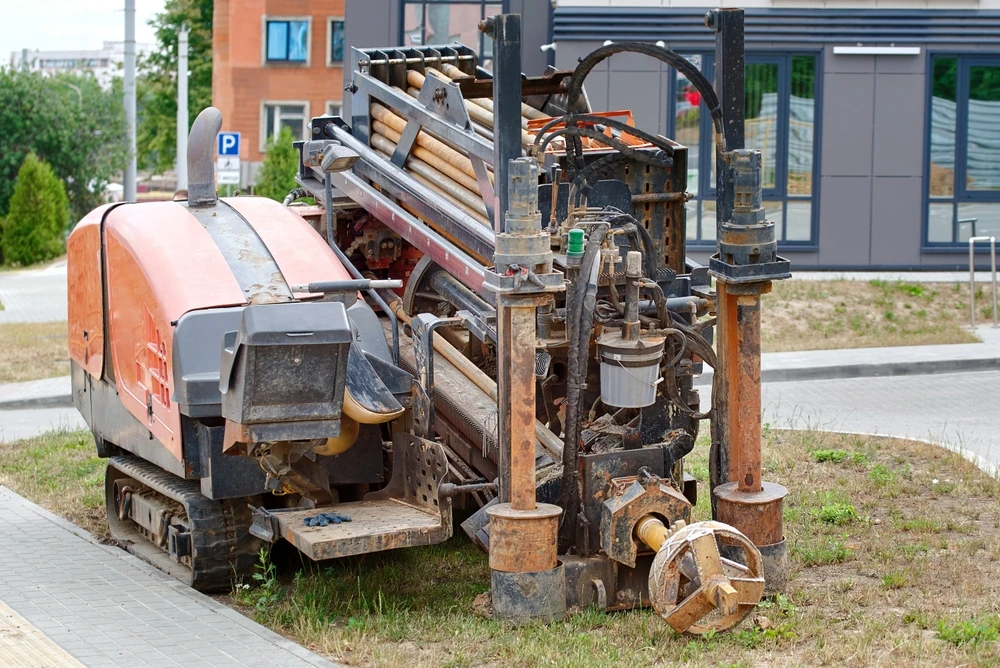
Urban environments concentrate people, services and critical infrastructure into relatively small spaces. This density multiplies the technical risk, cost and disruption associated with any excavation or utility installation below ground. What might be a routine trench in a greenfield site quickly becomes a complex coordination and engineering exercise on a busy city street.
Understanding these challenges explains why traditional open-cut trenching often proves impractical in modern cities and why alternative construction methods are increasingly preferred for new or upgraded underground services.
City streets are heavily congested with existing utilities. Beneath a typical urban roadway or footpath, it is common to find overlapping layers of water, gas, electricity, telecommunications, sewer and stormwater assets. Many of these were installed decades ago with incomplete or inconsistent records.
This density creates several issues. Service locations can be uncertain, increasing the risk of clashes or damage during excavation. Vertical space is limited, so finding a new alignment for additional pipes or conduits without infringing clearance requirements becomes difficult. Repair access also has to be preserved, which constrains where new assets can be placed. In older precincts, abandoned or redundant services may still occupy valuable space, yet cannot be assumed safe to remove without detailed investigation.
Urban roads often operate near capacity, which means any lane closure or detour rapidly leads to congestion. Traditional trenching typically requires multiple lanes to be closed for extended periods, along with laydown areas for spoil stockpiles, machinery and materials. In tight streets, that space is simply not available without severe disruption.
Regulatory authorities typically respond with strict conditions. Work windows may be limited to night or off-peak periods, shortening daily production and extending programme durations. Heavy penalties may apply if milestones are missed or traffic is impacted beyond approved limits. Pedestrian flows around shops, transport hubs and schools also need to be maintained, which further constrains site layout and staging.
Urban residents and businesses are highly sensitive to construction impacts. Continuous excavation with breakers, excavators and trucks creates noise, vibration and dust that can affect trading conditions, liveability and building occupants. In mixed-use precincts, there are often tight environmental limits on allowable noise levels and working hours.
Heritage or older buildings may be vulnerable to ground movement or vibration from conventional trenching. Hospitals, laboratories, data centres and broadcast facilities can have strict thresholds for vibration or service interruption. Meeting these requirements with open excavation methods typically demands extensive temporary works monitoring and mitigation, adding cost and complexity.
Finally, the surface environment is crowded. Street furniture, landscaping, public transport infrastructure, outdoor dining areas and overhead services all compete for space. Establishing safe access for machinery and workers while protecting these assets can be extremely challenging in narrow corridors.
Spoil removal and material delivery also become more difficult. Truck access may be restricted and on-site storage limited, forcing just-in-time logistics and careful sequencing. Weather protection signage and temporary surfacing for pedestrians and cyclists add further layers of planning whenever the surface is disturbed.
Directional drilling is specifically designed to install underground services while leaving streets, pavements and public spaces largely untouched. Instead of opening long trenches, it focuses on working within compact entry and exit points, which reduces visible disruption, dust and debris at ground level.
For busy urban areas, this approach is critical. Fewer open excavations mean less impact on traffic, pedestrians and nearby businesses. Essential upgrades to water, gas, power or communications networks can proceed with far less inconvenience to the surrounding community.
Traditional open‑cut trenching requires continuous excavation along the full length of the pipe or conduit. This approach often occupies multiple traffic lanes and large sections of the footpath. Directional drilling limits ground disturbance to relatively small launch and reception pits positioned at strategic locations.
Once the drill head is steered underground along the planned path, new services are pulled through the drilled bore. The overlying surface remains intact for almost the entire route. Roads typically stay open with at most short lane closures near pit locations and footpaths generally remain accessible with clear, contained work zones.
This compact footprint also reduces the volume of spoil to be removed from the site. Less excavation material means fewer truck movements, which in turn cuts noise, dust and congestion around narrow city streets.
In dense urban environments, the biggest concern is often how construction will affect movement. Directional drilling improves the ability to keep people and vehicles moving while work proceeds.
Because work is concentrated at defined points, traffic management can be carefully planned to maintain flows. Instead of closing whole blocks, it is usually possible to keep at least one lane operating in each direction or to stage works out of peak hours. Signalised intersections and key routes are far less likely to require full closures.
Pedestrian access is easier to maintain as pits can be fenced and bridged with temporary walkways. Shopfronts, public buildings and transport hubs can generally remain open with safe, clearly signed routes in place. This reduction in access disruption is important for retail precincts and high‑density residential areas.
Urban streetscapes incorporate a complex mix of pavements, landscaping, utilities and heritage or aesthetic features. Open‑cut trenching risks damaging these assets and often leads to visible patch repairs that degrade the appearance and performance of the surface.
Directional drilling preserves most existing surfaces, so high-quality asphalt concrete paving and decorative finishes do not need to be demolished and reinstated. This protects the long-term integrity of road and footpath structures and avoids the common problem of settlement or cracking along reinstated trench lines.
The technique is also well-suited to working beneath sensitive features such as:
By passing underneath rather than cutting through these areas, directional drilling limits physical disturbance and reduces the risk of costly remedial works or long-term environmental impacts.
Directional drilling is suited to built-up streets and confined sites because it threads new pipes or conduits between what is already in the ground instead of cutting a trench through everything. By steering the drill head in three dimensions, the crew can deliberately avoid existing utilities and sensitive assets and do so from a compact entry pit that needs only a small footprint.
This approach reduces service strikes, avoids shutting down lanes over long distances and allows work to proceed where traditional excavation would be physically impossible or unacceptably disruptive. For urban projects with dense utility corridors or very limited access, directional drilling often becomes the only practical method rather than simply a convenient option.
In busy urban areas, the subsurface is crowded with water mains, sewer lines, gas pipes, power ducts and communication cables. Conventional trenching exposes all of these along a linear path, increasing the risk of damage and often requires lengthy service outages while assets are supported or relocated.
Directional drilling uses a guided bore that can be profiled in advance to pass above, below or besides known services. A pilot rod string is steered using real-time tracking so the drill head can change depth or direction to avoid underground obstacles identified in surveys or dial-before-you-dig data. If the tracking system shows the bore approaching a critical asset, the operator can immediately correct the line, so the final pipe alignment maintains safe separation clearances.
Tight access sites such as narrow laneways, busy intersections, small easements or areas hemmed in by buildings are difficult to service using open-cut techniques that require continuous machinery access along the trench line. Directional drilling concentrates activity at a few small work zones, which can be planned to sit in available space such as a verge, a parking bay or a compound within a site boundary.
The drill rig and support equipment typically occupy a compact area and can operate from one side of a road or behind barriers, so pedestrian routes and most traffic lanes remain open. This is particularly valuable near hospitals, schools, shopping strips and transport hubs where access must be maintained and ground opening kept to a minimum.
For building connections in dense precincts, directional drilling can install services under driveways, landscaped areas and retaining structures without excavation at the surface. This reduces reinstatement costs and avoids damage to pavements, trees and built features that can be difficult to reconstruct to the same standard.
Working around live services and in restricted spaces introduces safety concerns. Open trenches create fall hazards and conflict with pedestrians and vehicles, while any contact with gas or high-voltage assets is high risk.
Directional drilling limits open excavations to small pits, which can be securely fenced or plated. Plants and workers are kept largely within controlled compounds instead of being spread along a trench alignment. The guided nature of the bore, combined with pre-work utility locating, reduces the likelihood of accidentally striking unknown services compared with blind excavation.
Less manual handling around exposed services and fewer people working at depth also contribute to lower incident rates. For asset owners and project managers operating in busy urban corridors, this risk reduction is often a decisive factor in selecting directional drilling around existing services and in tight-access locations.
Directional drilling is often the superior choice in built‑up streetscapes where space is limited and disruption must be kept to a minimum. It allows new services to be installed with far less excavation than open trenching, which reduces traffic impacts, surface reinstatement and interaction with existing utilities.
The decision usually comes down to risk, access and whole‑of‑project cost rather than just the price per metre of excavation. In many urban settings directional drilling delivers a safer, quicker and more predictable outcome than cutting long trenches through busy roads and footpaths.
On main roads and intersections, open trenching can trigger lane closures, detours and extended traffic control. Directional drilling allows bores to pass beneath carriageways so entry and exit pits can be located in verges, side streets or median islands.
This approach is typically preferable where:
By avoiding long open cuts in the pavement, directional drilling limits work areas to relatively small pits. This shortens the occupation of the road reserve and can reduce traffic management costs and delays to the public.
In areas with high‑value finishes, open trenching can be very expensive to reinstate to the required standard. Directional drilling reduces the length of surface disturbance, which often makes it more economical and less visually intrusive.
Directional drilling is generally a better option where works pass through:
By drilling beneath these surfaces, the need to demolish and rebuild complex pavements or landscaping is avoided. This is important in retail strips and civic precincts where extended construction scars can impact trading and public amenity.
In mature suburbs and CBD environments, underground space is crowded with existing services. Open trenching in such corridors can be slow and risky with frequent hand digging around live assets and a higher chance of strikes.
Directional drilling is often preferable where:
Modern locating, tracking and steering technologies allow the drill head to be guided on a precise three‑dimensional path between known utilities. This can reduce clashes with existing networks and limit the need to expose long runs of other assets just to place a new pipe or conduit.
Directional drilling has emerged as a practical and efficient solution for installing underground infrastructure in dense urban environments where disruption must be carefully managed. Its ability to minimise excavation, reduce impacts on traffic and communities and navigate complex subsurface conditions supports safer and more predictable project outcomes. As urban areas continue to grow and infrastructure demands increase, integrating directional drilling into planning and delivery frameworks allows civil works to proceed with greater efficiency, reduced risk and improved long-term performance.


