Now Also operating from our new yard in Alice Springs. Our address is 3/31 Elder Street Ciccone 0870.


When Is Hydro Excavation Needed Before Directional Drilling?
June 23, 2026
On civil and infrastructure projects, directional drilling success often depends on understanding what lies beneath the surface before drilling begins. As underground utility networks become more congested, verifying existing assets before trenchless work starts has become an important part of safe project planning. For contractors delivering hydro excavation in Darwin, including JSM Civil, knowing when to expose services before drilling helps manage safety, compliance and asset protection.
This article explains when hydro excavation may need to be completed before directional drilling, how utility verification influences drilling decisions and why potholing remains an important risk-control measure. It also explores the site conditions, regulatory considerations and practical factors that help determine whether exposing underground services is necessary before drilling proceeds.
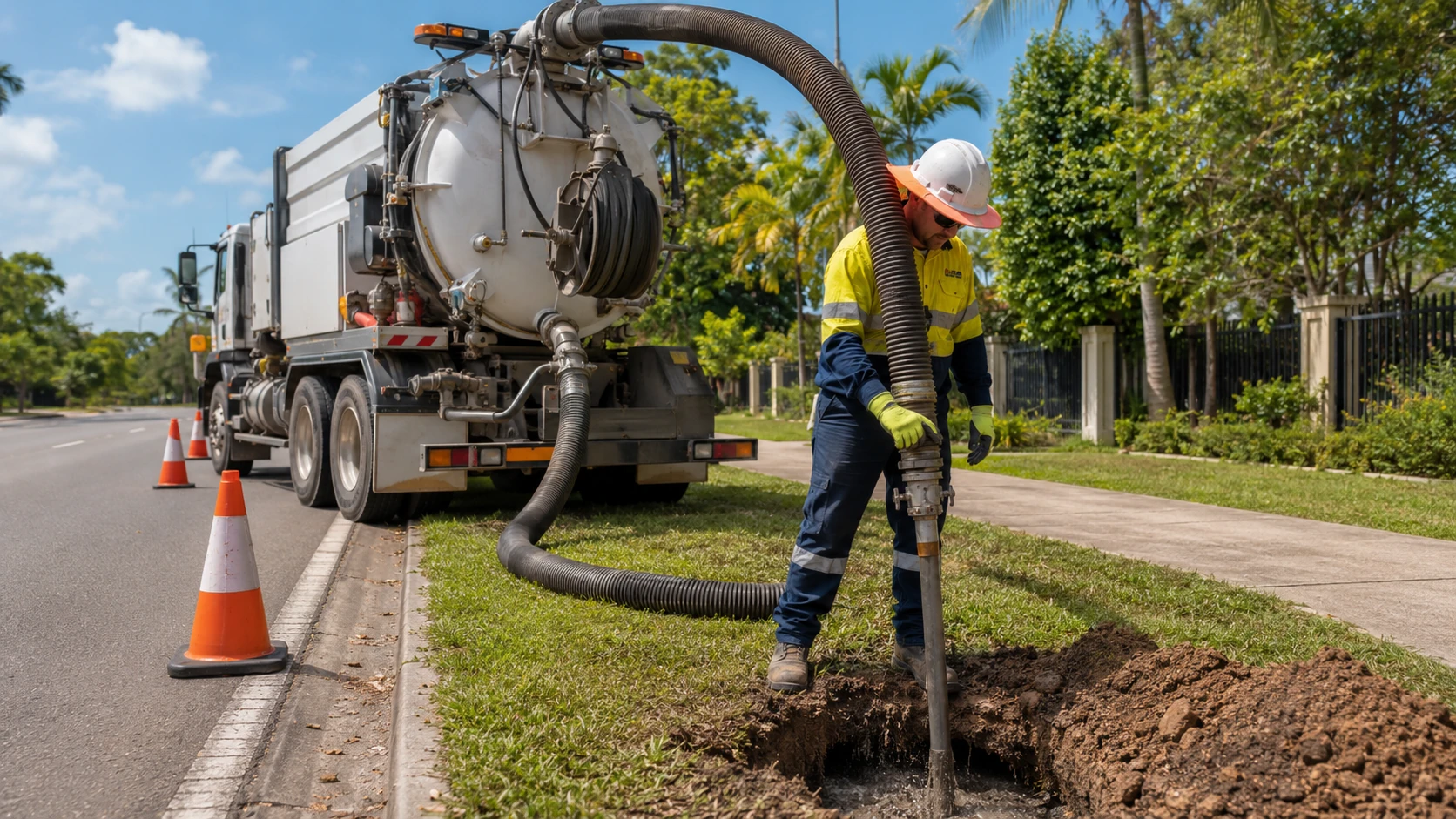
Verifying existing underground services before directional drilling is critical because many services sit within or close to proposed bore paths. Power, gas, water, sewer, drainage and communications infrastructure can all be affected if their actual position is not known before work begins.
Plans, asset records and electronic locating are important starting points, but they do not always provide the level of certainty needed for drilling. Actual in-ground positions can differ from drawings due to older installation methods, undocumented changes, previous repairs, incomplete survey records or inaccurate asset information. Hydro excavation provides direct visual confirmation of service location, allowing drill paths to be planned and adjusted using verified field data rather than assumptions.
Service clashes rarely cause only a minor delay. A single strike can shut down a site, damage equipment, interrupt essential services, trigger emergency response and expose project owners and contractors to legal and financial consequences. Proper verification of services upfront is therefore a key risk-control measure, particularly where directional drilling will pass near existing infrastructure.
Asset owner records are an essential starting point, but they are not always precise enough on their own for safe drilling. Older networks may have incomplete or outdated records. Assets may have been relocated, repaired or extended without accurate survey pick-up. In some cases, depths shown on plans may be approximate, and horizontal positions can be out by hundreds of millimetres or more.
Electronic locating and ground-penetrating radar can improve confidence, but they still provide an inferred position rather than direct confirmation. Signal distortion, service congestion, ground conditions, depth, metallic interference and nearby utilities can all affect the accuracy of locating results.
Hydro excavation validates or corrects these inferred positions by exposing the actual asset. Once the service is visible, the drilling team can confirm its depth, horizontal alignment, material, condition and relationship to the proposed bore path. This gives designers, supervisors and drill operators more reliable information before drilling begins.
Unverified services can be intersected by the drill head, reamer or product pipe during pilot drilling or pullback. A strike on a high-voltage electrical cable or gas main is an immediate safety emergency and can result in serious injury, major service disruption or worse. Hitting water, sewer or stormwater infrastructure can cause flooding, contamination, erosion or damage to surrounding assets. Severed fibre or communications ducts can also create widespread commercial and operational impacts.
Hydro excavation at critical crossing points creates safe daylighted windows where the drill path intersects or passes near existing services. These exposed areas allow the drilling crew to monitor clearances and adjust the bore trajectory if required.
This approach reduces the likelihood of:
By confirming services before drilling, project teams can make safer decisions about bore depth, alignment and separation from existing assets.
Asset owners, councils, utility providers and project principals often require services to be identified before work proceeds near them. Failing to verify underground assets can be considered a breach of permit conditions, contractual obligations or duty of care, especially where the risk was foreseeable.
Insurance policies and safety management systems may also require contractors to take all reasonably practicable steps to locate and protect underground services. On higher-risk sites, relying only on plans or locating without physical verification may not be enough to demonstrate that appropriate controls were used.
Hydro excavation helps projects demonstrate that service protection has been considered properly. It can support compliance with asset protection requirements, safety procedures and industry expectations by providing visible evidence of where services are located.
This helps reduce the risk of:
Upfront verification adds time and cost, but it can protect the project budget and programme from far greater unplanned impacts.
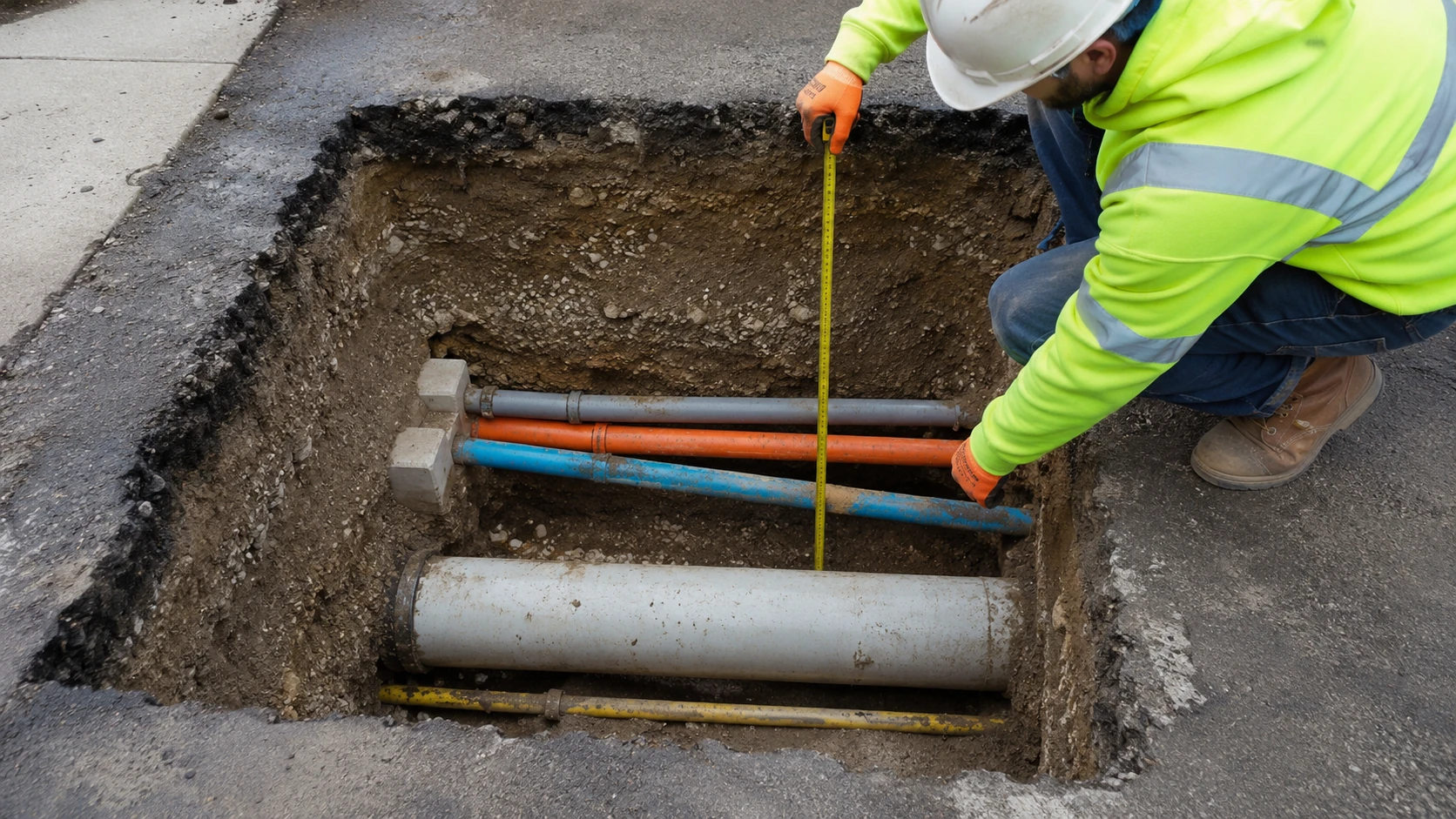
Hydro excavation is commonly used for potholing where accurate underground utility location is required before directional drilling begins. It uses pressurised water and vacuum extraction to expose buried services in small, controlled excavations without the mechanical impact of an excavator bucket.
Potholing with hydro excavation provides visual confirmation of where assets sit in relation to the planned drill path. This helps reduce strike risk, avoid delays and give designers and drill operators the exact clearances and depths needed to proceed safely.
Potholing usually starts with a review of available utility information. This may include Before You Dig Australia plans, asset owner records, survey information, site observations, electronic locating or ground-penetrating radar. Once the likely position of a service is identified, the target location is marked on the surface.
A hydro excavation truck then positions near the work area. The operator uses a controlled jet of pressurised water to break up the ground surface and underlying material. At the same time, a vacuum hose removes the slurry into the truck’s spoil tank. This keeps the excavation clean, reduces loose spoil on site and allows the operator to work carefully around buried services.
The process continues in a narrow excavation until the utility is exposed. Potholes are typically only large enough to safely view, measure and record the asset. This limits surface disturbance compared with open trenching.
Once the service is exposed, the team can record:
The pothole can then be backfilled and compacted, reinstated with a surface patch or left accessible if inspection or monitoring is required during drilling.
For directional drilling, the main purpose of potholing is to turn uncertain map information into verified field data. Hydro excavation can be used to:
This information can influence drill entry and exit points, bore depth, reaming strategy and alignment. Where the planned bore conflicts with a verified service location, the design can be adjusted before drilling begins rather than after a problem occurs.
In congested corridors, several potholes may be set out along the proposed route to build a clearer picture of the underground environment. This is especially useful where utilities cross the bore path at different depths or where shallow services create limited clearance for the drill head.
Potholing with hydro excavation is also useful where site constraints or environmental controls make conventional excavation unsuitable. The truck can remain in a safer or less congested area while the hose and lance reach into narrow verges, road shoulders, footpaths or areas around existing structures and vegetation.
Because the excavation footprint is small and spoil is captured in the tank, hydro excavation can suit urban streetscapes, live traffic areas, rail corridors, footpaths, service easements and critical infrastructure sites. It also reduces the need for large stockpiles of excavated material, which can be difficult to manage in confined work zones.
Restoration is usually limited to compacting backfill and reinstating a relatively small surface patch. This helps reduce disruption to residents, businesses, pedestrians and road users while still giving the drilling team reliable information.
Hydro excavation is not required on every directional drilling project. However, certain site conditions make it the safest and most practical option. It becomes more important where there is uncertainty about what lies below the surface or where the consequences of striking an existing service are high.
Understanding the ground, services and surrounding environment before drill rods enter the soil helps reduce the likelihood of unexpected clashes, ground instability or project delays.
In urban corridors, industrial areas and brownfield sites, there is often only partial or outdated information about underground infrastructure. Plans and drawings provide a starting point, but they do not always confirm precise positions or depths.
Hydro excavation is commonly used where:
Vacuum excavation allows safe potholing along the proposed drill alignment to daylight each service before drilling begins. This reduces the chance of cross-bores, pipe strikes and cable damage, while allowing the bore depth or alignment to be adjusted with greater confidence.
Certain services carry a much higher consequence if damaged. In these situations, non-destructive excavation may be required by the asset owner before directional drilling can proceed within a specified clearance.
Hydro excavation is particularly important around:
In these environments, mechanical excavation close to the asset may be restricted or prohibited. Hydro excavation can be used to verify clearances at critical crossing points, expose joints or bends, confirm changes in depth and create safe windows for the drill head to pass.
Ground that is prone to collapse, contains mixed fill or has unknown material can increase risk during directional drilling. Hydro excavation can assist by allowing controlled removal and inspection of material before or during drilling.
Site conditions that may trigger the need for hydro excavation include:
Hydro excavation is also useful where surface access is restricted. Tight work zones in road corridors, rail reserves, footpaths or live traffic areas may not allow for large open trenches. Vacuum excavation can create compact, precise pits for inspection, launch, reception or tie-in works without excessive surface disturbance or spoil spread.
Hydro excavation is rarely required along the full length of a directional drilling bore. Most projects only need targeted potholing or trenching at specific risk points to confirm the location and depth of underground services before the drill passes through.
The extent of hydro excavation depends on the density of existing utilities, the level of uncertainty, the consequence of a strike, project specifications and local regulatory or asset owner requirements. In lower-risk areas with reliable records and clear separation from existing services, targeted verification may be enough.
This means hydro excavation is usually applied selectively to expose utilities at critical locations, such as entry and exit pits, known crossings and areas where records are incomplete. The remaining sections of the bore path are typically managed using design plans, electronic locating, survey information and experienced drilling practices.
Hydro excavation is most often needed at:
At these locations, hydro excavation is used to physically daylight utilities so the drilling crew can measure actual depth, horizontal position and clearance. This allows the bore path to be adjusted before drilling or monitored during drilling where required.
Although uncommon, some projects may justify hydro excavation along a larger section of the bore alignment. This is more likely where:
In these situations, a narrow hydro excavated track above or beside the proposed bore path may provide a clearer view of ground conditions and service layout. This approach increases time and cost, but it can be justified where the risk of drilling blind is too high.
Deciding how much of the bore path to expose involves balancing safety, asset protection, programme and budget. A practical approach is to:
The aim is not to excavate unnecessarily. The aim is to use hydro excavation where it provides the most value as a risk-control measure. A targeted strategy helps reduce the chance of service strikes without exposing the full bore length where the risk does not justify it.
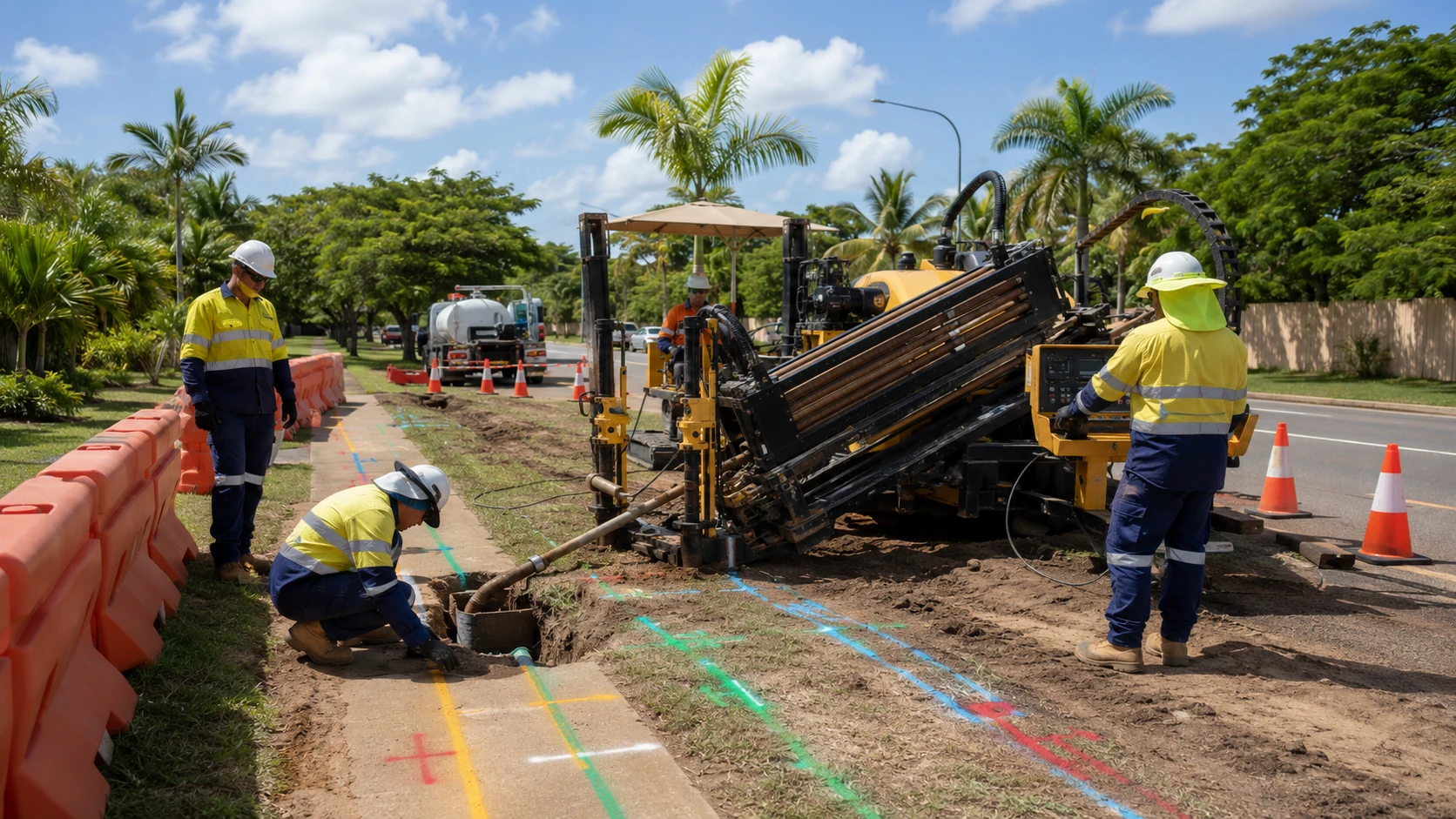
On many projects, hydro excavation forms part of the planning and preparation process for directional drilling rather than being treated as a separate afterthought. Used correctly, it confirms what is below the surface so drilling can proceed more safely and accurately.
Hydro excavation can support the directional drilling process by exposing existing utilities, verifying ground conditions and preparing access points before the drill rig commits to the bore. Each of these tasks reduces uncertainty and helps prevent problems that could stop the job midway.
The most common role of hydro excavation is service proving or potholing before drilling starts. Before You Dig Australia plans, asset owner records and electronic locating provide valuable information, but they may not provide enough certainty for a drill head to pass close to an existing utility.
Once services are exposed, the exact locations can be surveyed, photographed and marked. The drill path can then be reviewed against verified service data. If the service is shallower, deeper or offset from the expected location, the project team can alter the bore depth, entry angle, alignment or staging before drilling begins.
This is especially important where the drill path must pass within tight tolerances or where there is limited room to deviate because of roads, structures, easements or other underground assets.
Directional drilling performance depends on both service location and ground conditions. Unexpected rock, rubble, loose saturated material, tree roots or construction debris can cause the drill head to deflect, stall or lose accuracy. Hydro excavation may be used in targeted test holes to ground-truth what geotechnical information or local knowledge suggests.
Small hydro excavated test pits can help identify:
This information can then be used to refine the drilling method, adjust the planned depth, alter the bore path or reconsider whether directional drilling is suitable for that section of the project.
At the start and end of a bore, hydro excavation is often used to create or refine working pits. These areas can be high risk because the drill head is entering or exiting the ground near existing services, pavements, structures or tie-in locations.
Mechanical excavation in these areas can increase the chance of damaging services, particularly where utilities are shallow or congested. Hydro excavation allows the crew to expose surrounding services and structures before setting the drill rig angle, depth and alignment.
This helps reduce the risk of:
By confirming entry, exit and tie-in conditions, hydro excavation helps the installed asset meet design requirements and reduces the chance of unexpected issues during final connection works.
Hydro excavation reduces uncertainty before directional drilling begins. Whether it is used to confirm the location of critical utilities, manage congested service corridors, assess challenging ground conditions or support compliance obligations, the process provides accurate field information that helps project teams make safer drilling decisions.
It is not always necessary to expose the entire bore path, but targeted potholing at key risk points can make a significant difference. Rather than relying solely on plans or electronic locating, exposing services gives contractors a higher level of certainty where the consequences of error can be serious. For directional drilling projects, hydro excavation is most valuable when it is used strategically to verify risks before they become costly problems.


