Now Also operating from our new yard in Alice Springs. Our address is 3/31 Elder Street Ciccone 0870.


Keeping a Drilled Bore Stable Through Darwin's Wet Season
October 26, 2026
A drill can advance through saturated ground without leaving a stable opening behind it. For directional drilling projects in Darwin, that distinction matters because progress depends not only on how far the drill has travelled but also on how the surrounding ground responds. During the wet season, heavy rainfall, changing drainage conditions and groundwater variability can add uncertainty to the work.
When comparing contractors for directional drilling, understanding bore support helps explain why some sections require more careful management than others. JSM Civil works in conditions where ground assessment, drilling fluid management and effective planning are important to project delivery. Knowing how these factors influence bore stability can help project managers ask questions about progress, interruptions and completion estimates.
A drilled bore is a temporary opening in the ground that previously supported itself as a continuous mass. Removing material changes that balance and the opening may become unstable if the surrounding ground cannot maintain its shape. The level of support depends on the soil or rock, groundwater conditions and the drilling method.
Saturated ground does not behave uniformly. Relatively cohesive material may respond differently from loose, water-bearing sand, while changes in soil composition along the alignment can introduce additional challenges. The wet season can make site conditions more difficult to predict, but the actual risks depend on the ground profile and groundwater conditions at the project location.
Unlike a permanently lined tunnel, a drilling bore does not have a finished structural lining holding its walls in place. Its shape can change as surrounding material responds to the opening. Loose particles may move into the bore, while some clay-rich materials may soften or swell when exposed to water and drilling fluid.
These changes can reduce the available space within the bore or increase resistance as drilling continues. Reaching a particular point does not confirm that the entire opening behind the drill remains stable. Bore stability needs to be managed throughout the operation when the alignment passes through different ground materials.
A site investigation helps establish likely conditions, but it cannot identify every variation between investigation points. Contractors must consider available ground information alongside observations made during drilling. When comparing suppliers, ask how they assess changes in ground conditions and adapt their approach when the material encountered differs from expectations.
The article on choosing the right directional drilling method for local ground conditions provides further context on why the drilling method needs to suit the site.
Groundwater occupies pores, cracks and other spaces below the surface. It differs from rainwater collecting in a low-lying area, so visible surface water alone cannot establish the groundwater level or conditions at the depth of the bore.
In loose, water-bearing soils, seepage and groundwater pressure can affect how particles behave around an opening. In other materials, prolonged exposure to water may weaken or alter the bore wall. These mechanisms vary according to the formation, so a single assumption about waterlogged ground cannot be applied to every site.
The wet season can influence site drainage and groundwater conditions, depending on local geology, rainfall and existing drainage. However, rainfall does not automatically mean groundwater will rise at every project location. Contractors need to consider site-specific information rather than rely on weather conditions alone.
The Bureau of Meteorology’s groundwater data can provide background information on nearby bores, bore logs and groundwater levels where available, alongside site-specific investigation.
For project managers, the useful question is how the contractor will identify and respond to changes that could affect bore stability. A sound explanation should connect the anticipated ground and groundwater conditions to the proposed support approach, including how unexpected conditions will be managed.
Drilling fluid helps transport cuttings away from the drill and can also contribute to supporting the temporary bore. Its effectiveness depends on the fluid system, the ground being drilled and the conditions maintained during the operation.
During the wet season, these considerations become relevant when changing site conditions introduce uncertainty. The important issue is not simply whether drilling fluid will be used, but how the contractor will assess its performance and respond when the bore behaves differently from expected.
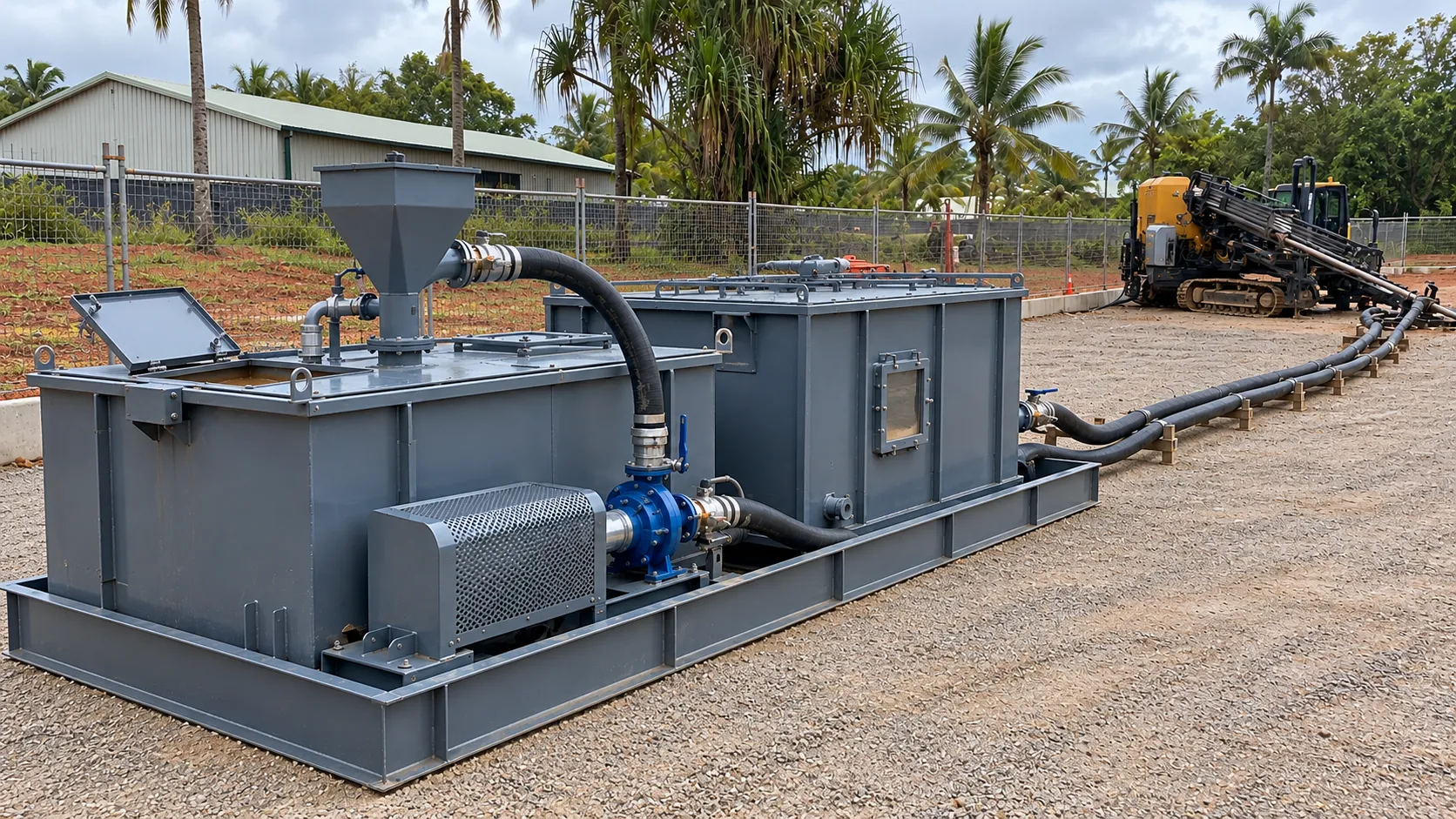
As the drill cuts through the ground, the loosened material needs to be carried out of the bore. Drilling fluid helps transport these cuttings, limiting the amount that accumulates within the opening. Poor cuttings transport can contribute to restrictions and make continued drilling more difficult.
The fluid can also help support the bore wall. Depending on the formation and fluid system, it may help maintain pressure within the opening and form a filter cake against permeable ground, reducing fluid loss into the surrounding material. These effects depend on the conditions encountered and effective cuttings transport does not automatically mean the bore wall is adequately supported.
Fluid properties and operating settings therefore need to suit the ground being drilled. A system that performs well in one formation may require adjustment when the bore enters another. Groundwater conditions also influence how the fluid interacts with the surrounding material.
These decisions belong with drilling professionals. There is no universal fluid mixture or operating setting that guarantees stability in every saturated formation. When comparing contractors, ask how site information informs fluid selection and how performance is monitored during drilling.
Advancing faster does not always lead to a more efficient project. Drilling needs to maintain appropriate bore support while managing the material generated by the cutting process. If conditions change, the contractor may need to adjust the operation rather than continue at the same rate to meet a production target.
Contractors assess several observations together, including drilling resistance, fluid circulation and the material returning from the bore. Changes in these indicators may prompt further investigation, although no single observation confirms the condition of the entire opening.
This is why metres drilled per day should not be the only measure used to assess progress. A slower section may reflect a necessary response to changing ground conditions rather than poor productivity. Equally, a contractor should be able to explain why an adjustment is needed instead of attributing every delay to wet weather.
When reviewing progress updates, ask what has changed, how it affects the drilling operation and whether it alters the expected completion date. Clear answers help distinguish reasonable adjustments from unexplained delays and provide a more useful basis for project planning.
A partly completed bore should not automatically be treated as a stable, permanently open passage during an interruption. Groundwater, surrounding soil and the drilling fluid can continue to influence its condition even when the drill is not advancing.
The implications depend on the formation, the support maintained before the pause, the length of the interruption and any changes in site conditions. Some bores remain suitable for continued drilling after a break, while others require further assessment or work before operations resume.
During active drilling, fluid circulation and cuttings transport form part of the conditions managed by the contractor. When work stops, these processes change. Material suspended in the fluid may settle and the bore wall continues to interact with the surrounding ground and groundwater.
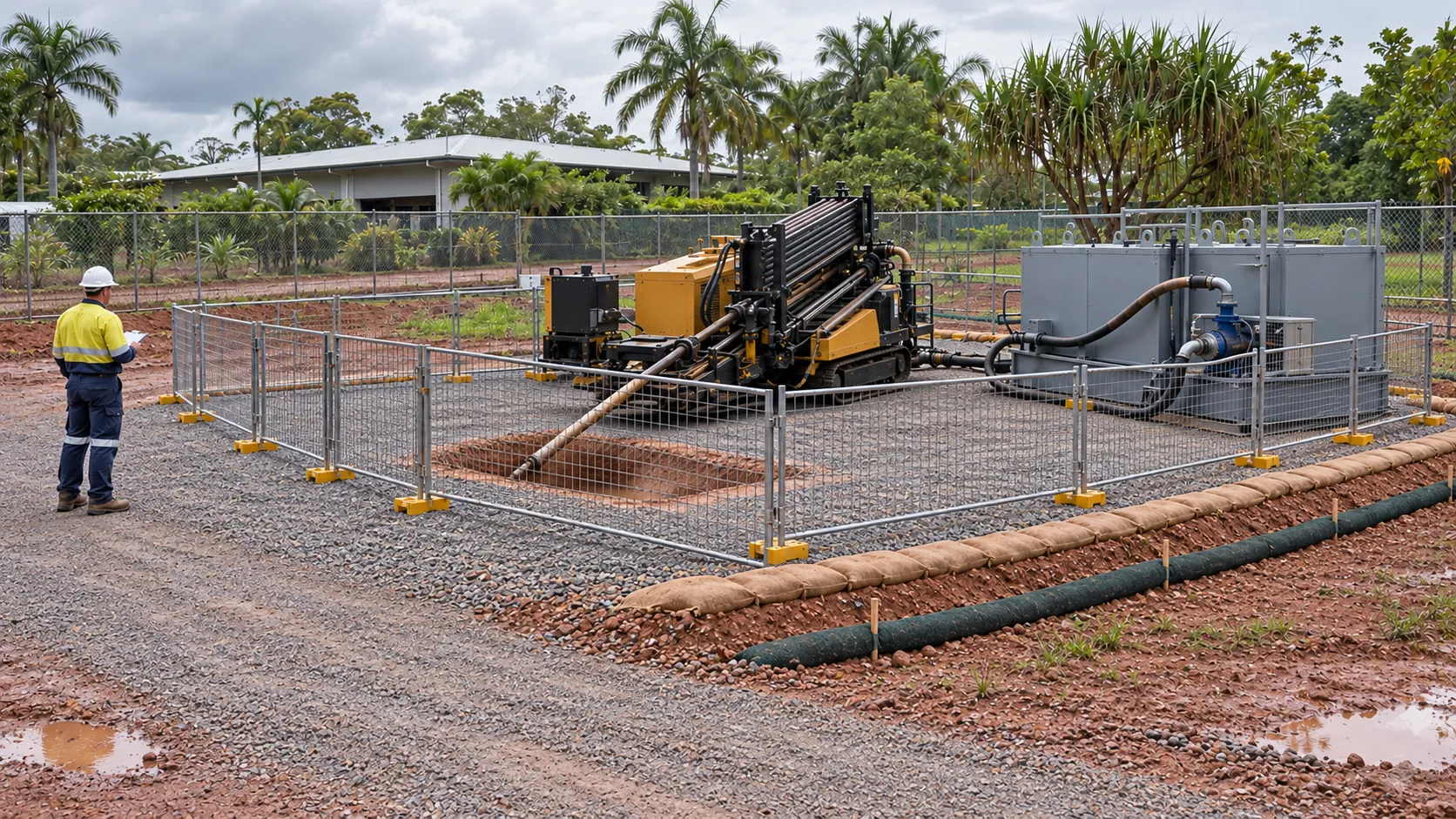
In susceptible formations, particles may loosen or move into the opening. Some materials may also soften or swell over time. These processes can reduce the available space within the bore, even when no additional ground is being removed.
However, a pause does not automatically cause instability. The response depends on the ground and the conditions maintained during the interruption. Elapsed time alone cannot establish whether the bore is ready for work to resume.
Wet-season weather may add another consideration if rainfall affects site access, surface drainage or groundwater conditions during the break. The potential impact depends on the location and ground profile, rather than rainfall alone. For broader context, see how wet-season weather affects drilling projects.
Before resuming work, the contractor may need to assess whether the bore remains suitable for continued drilling. This decision draws on the ground encountered, observations recorded before the pause, the interruption itself and the bore's response as operations recommence.
If the bore has changed, additional work may be necessary to restore suitable conditions before drilling continues. The appropriate response depends on the findings, so a contractor should not assume that every interruption can be followed by an immediate return to the previous production rate.
For project managers, this makes completion estimates that assume uninterrupted progress less reliable. A useful estimate should account for the expected drilling programme while recognising that unexpected conditions may require reassessment, recovery work or changes to the schedule.
When discussing a restart, ask how the contractor has assessed the bore, whether any remedial work is required and how the findings affect the completion estimate. The aim is to understand the current condition, the reasons for any revised expectations and the next steps, rather than to dictate technical operating decisions.
Directional drilling through waterlogged ground requires more than steady drilling progress. Groundwater, soil conditions, drilling fluid performance and interruptions can all influence bore stability. Consider JSM Civil when comparing contractors. By discussing ground assessment, bore support, fluid management and restart procedures before work begins, project teams can establish clearer expectations around site conditions and completion estimates.


