Now Also operating from our new yard in Alice Springs. Our address is 3/31 Elder Street Ciccone 0870.


Geotechnical Insights and Environmental Compliance in Hydro Excavation
December 19, 2025
Working in the ground always comes with unknowns, especially in regions like Darwin where soil conditions can change quickly over short distances. Every project our team at JSM Civil takes on starts with understanding what lies beneath the surface and how it behaves once exposed to water and vacuum pressure. Getting hydro excavation in Darwin right protects assets while keeping timelines on track and avoiding unnecessary environmental impact, all while delivering clean and accurate outcomes for our clients.
Experience has shown that careful planning and respect for ground conditions lead to safer works and better results across civil or commercial and infrastructure jobs. Environmental responsibilities also play a major role in how excavation is carried out today, with strict expectations around water use with waste handling and site protection. Combining geotechnical awareness with responsible practices ensures each project is completed efficiently without cutting corners or creating long-term issues.
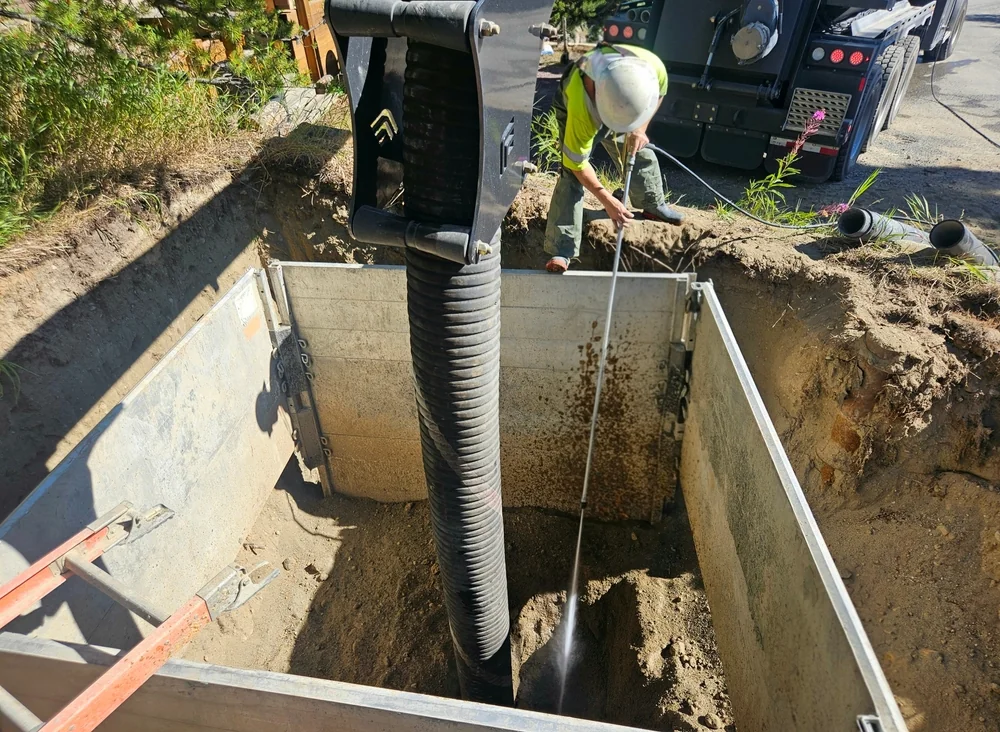
Ground conditions influence every decision made before and during excavation works, from equipment setup through to spoil management. Soil composition with moisture levels and underground services all interact differently when water pressure is introduced into the ground. A strong understanding of these factors allows excavation to remain accurate and safe while protecting surrounding assets and surfaces.
Failing to assess ground behaviour can lead to unstable openings or service strikes or even unnecessary cleanup costs. Careful evaluation reduces guesswork and improves outcomes for both small access works and large-scale infrastructure projects. This approach ensures excavation remains predictable even in complex or sensitive areas.
Geotechnical assessments provide clear insights into soil density with layering and moisture content before excavation begins. These details help identify how water will interact with the ground and how quickly material can be safely removed without undermining surrounding services. Understanding these factors allows excavation to be adjusted around known and unknown assets.
Different soil types respond uniquely when water and vacuum systems are applied during excavation. Loose sands or reactive clays and mixed fill each require a tailored approach to maintain accuracy and stability. Recognising these differences supports cleaner cuts and better depth control.
Uncontrolled pressure can lead to ground failure or service damage or water escaping beyond the excavation zone. Understanding soil limits allows crews to apply water at levels that break material without forcing it into surrounding areas. This control protects both the worksite and nearby infrastructure.
Environmental responsibility is now a core part of excavation planning and execution. Projects must manage water use, waste handling and site protection in line with strict expectations. Responsible practices protect local ecosystems while maintaining compliance with regulatory requirements.
Excavation methods that limit disturbance and control waste offer clear advantages when working near sensitive areas. Environmental planning ensures that work progresses smoothly without regulatory delays or penalties. A considered approach also builds trust with clients and authorities alike.
Excavation can affect natural water movement if not carefully controlled. High water tables and surface runoff require planning to prevent contamination or erosion beyond the work zone. Managing these risks protects both the site and surrounding environments.
Excavated material mixed with water must be handled responsibly once removed from the ground. Slurry management involves separating solids and liquids where required and disposing of waste through approved channels. Proper handling avoids environmental harm and maintains compliance.
Modern excavation methods align closely with environmental expectations set by regulators. Reduced disturbance and controlled waste management support compliance across a range of project types. This alignment simplifies approvals and inspections.
Beyond safety and environmental benefits, this excavation approach delivers clear practical advantages. Precision with cleanliness and adaptability make it suitable for a wide range of applications. These benefits support efficiency without sacrificing quality.
Projects benefit from reduced downtime and fewer unexpected issues. Controlled excavation methods provide consistency across different site conditions. This reliability makes planning and execution more straightforward for clients and contractors alike.
Sites with dense services or restricted access demand careful excavation techniques. Precision allows material to be removed exactly where needed without affecting nearby assets. This accuracy supports work in challenging environments.
Maintaining ground stability is essential for safety and efficiency. Limiting disturbance reduces trip hazards or collapse risks and surface damage. Safer worksites lead to smoother operations and better outcomes.
Efficiency plays a major role in project success. Controlled excavation often completes tasks faster with less cleanup compared to traditional methods. These efficiencies translate into cost savings and improved scheduling.
Strong planning and responsible practices are what separate reliable excavation from costly mistakes. Understanding ground conditions and environmental responsibilities ensures each job progresses safely and efficiently. These considerations protect infrastructure and reduce risk while supporting better outcomes for all stakeholders.
Delivering consistent results requires experience and attention to detail at every stage of the process. By focusing on precision with safety and compliance, JSM Civil continues to support projects that demand accuracy and accountability. This approach builds confidence and delivers excavation solutions that stand up to both practical and environmental expectations.


