Now Also operating from our new yard in Alice Springs. Our address is 3/31 Elder Street Ciccone 0870.


What Sets Modern Hydro Excavation Apart from Traditional Digging?
October 31, 2025
Precision and safety have become crucial factors in today’s construction and infrastructure projects, especially when operating in areas where buried utilities or environmental risks are involved. Our experts at JSM Civil know how modern excavation methods have evolved to protect assets and minimise disruption while delivering more efficient results. While traditional digging techniques are effective for broad earthworks, they often struggle in environments that demand accuracy and reduced impact.
Modern hydro excavation in Darwin has quickly become the preferred solution for delicate or high-risk projects. By combining advanced technology with careful water-based excavation, it allows teams to work safely around underground networks and sensitive environments. The process minimises hazards and supports compliance while enhancing productivity, making it a reliable choice for urban developments and industrial projects alike.
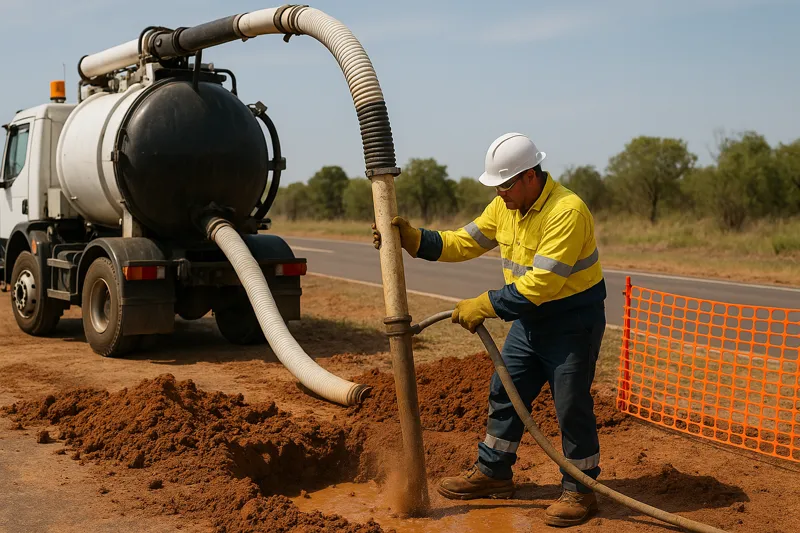
Excavation projects that take place in areas filled with underground utilities or fragile ecosystems face a higher potential for damage and costly delays. Hydro excavation provides a safer and more controlled approach by using high-pressure water and vacuum systems to uncover what lies below without physically striking it. This makes it especially valuable for environments where precision and environmental care are priorities. By reducing manual contact and unnecessary digging, it ensures compliance and minimal disruption to surrounding infrastructure.
When traditional machinery cuts through the ground, it often risks striking pipes or cables and other critical assets. Hydro excavation greatly reduces this risk by gently exposing these utilities, preventing downtime and costly repairs. The method supports essential safety practices and keeps utility services uninterrupted during construction work.
Environmental preservation has become a key part of modern infrastructure work, especially in sensitive or regulated areas. Hydro excavation offers a cleaner and more compliant approach that reduces erosion and sediment runoff. It allows operators to meet environmental standards while maintaining efficiency.
Worker safety and project timelines are closely linked in excavation operations. Hydro excavation improves both by reducing the need for manual digging and minimising exposure to hazardous underground conditions. Its cleaner and faster performance allows teams to focus on quality while maintaining strict safety standards.
Technology has transformed the way excavation work is carried out, and hydro excavation stands at the forefront of this innovation. Modern systems integrate sensors and digital monitoring to improve precision and reduce risk. These technologies make it possible to plan and execute excavation tasks with greater accuracy and less environmental impact. With real-time insights and smart controls, teams can work faster and more efficiently across a wide range of project types.
Automation has become a defining factor in achieving consistent and accurate excavation results. By reducing human error and providing continuous monitoring, automated systems enhance control over excavation depth and debris management. These tools help operators achieve exact specifications while ensuring compliance with safety standards.
IoT and GPS integration have taken hydro excavation beyond simple digging, turning it into a data-driven process. These technologies allow teams to monitor every aspect of the project remotely and in real time, improving coordination and safety outcomes. They also support better communication between field workers and project managers.
Digital tools are now being used to manage and record hydro excavation projects from start to finish. Software platforms allow teams to visualise underground networks and document each phase of the job. This integration supports compliance and improved resource allocation.
Regulatory compliance is critical for all excavation activities, particularly in areas where public safety and environmental protection are involved. Hydro excavation has earned industry recognition for aligning with safety standards and environmental codes of practice. By incorporating approved methods and documentation, it ensures that every project meets the expectations of regulators and clients alike. Following these standards also helps protect the reputation and reliability of construction companies.
Safe Work Australia provides clear frameworks for minimising workplace risks, and hydro excavation naturally fits within these requirements. Its low-impact and controlled approach supports the safety principles outlined in national guidelines. By reducing exposure to hazards and preventing accidental damage, it ensures safer job sites across the board.
Hydro excavation also supports the stringent requirements set by utility companies and local councils. These bodies often require detailed planning and monitoring for any excavation near their assets. Using this method demonstrates a proactive approach to safety and compliance.
Accurate documentation is a cornerstone of responsible excavation practices. It ensures accountability and provides a reference for future maintenance or development work. Hydro excavation simplifies this process by generating clear records of every stage.
Hydro excavation represents a major step forward in excavation technology and practice, especially for projects that demand precision and environmental care. By using advanced water-based methods and integrating real-time monitoring, companies can handle sensitive projects more responsibly and efficiently than ever before. This innovative approach not only reduces physical risks but also enhances productivity and compliance across diverse industries.
As construction and infrastructure standards continue to evolve, hydro excavation stands out as a trusted method for modern projects. Its ability to balance performance and environmental stewardship ensures lasting value for clients and communities. With JSM Civil leading the way, this technology continues to shape the future of safe and efficient excavation.


